

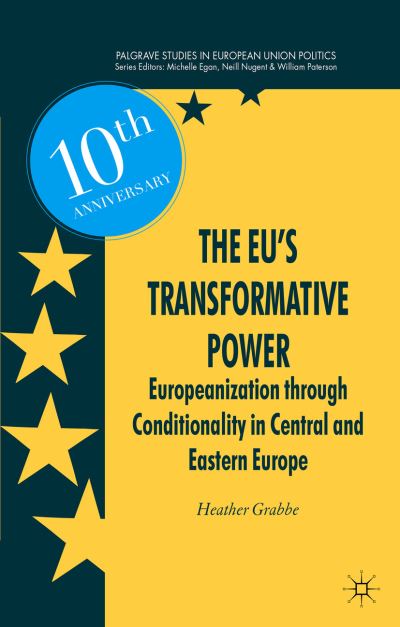
Between 1989 and 2004, the EU's conditionality for membership transformed Central and East Europe. The EU had enormous potential power over the whole range of domestic politics in the candidate countries. However, the EU was able to use that power at a few key points in the process leading to their accession.
The EU's long-term influence worked primarily through soft power and through voluntary rather than coercive means. During the membership preparations, the EU built many different routes of influence into the candidate countries' domestic policy-making through 'Europeanization'. The Central and East Europeans voluntarily took on the Union's norms and methods, guided by the European Commission, in a massive transfer of policies and institutions.
However, the EU missed important opportunities to effect change as well. The EU's Transformative Power explores in detail how the EU used its influence to control the movement of people across Europe, through both coercive use of conditionality and voluntary methods of Europeanization.
| ISBN: | 9781137574770 |
| Publication date: | 10th November 2005 |
| Author: | Heather Grabbe |
| Publisher: | Palgrave Macmillan an imprint of Palgrave Macmillan UK |
| Format: | Paperback |
| Pagination: | 231 pages |
| Series: | Palgrave Studies in European Union Politics |
| Genres: |
Politics and government Political science and theory Public administration International relations |
Between 1989 and 2004, the EU's conditionality for membership transformed Central and East Europe. The EU had enormous potential power over the whole range of domestic politics in the candidate countries.
The EU's Transformative Power features in the following genres: Politics and government, Political science and theory, Public administration, International relations
Paperback, Hardback. £40.49, down from the £44.99 cover price. Not Available.
The EU's Transformative Power was written by Heather Grabbe and published by Palgrave Macmillan an imprint of Palgrave Macmillan UK
The EU's Transformative Power has 231 pages
Yes it is part of Palgrave Studies in European Union Politics series
£40.49, reduced from £44.99. Not Available.