

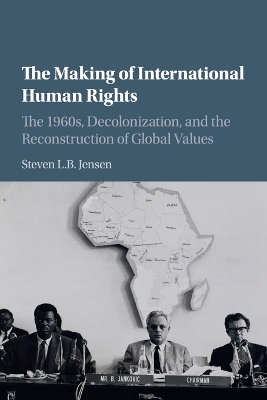
This book fundamentally reinterprets the history of international human rights in the post-1945 era by documenting how pivotal the Global South was for their breakthrough. In stark contrast to other contemporary human rights historians who have focused almost exclusively on the 1940s and the 1970s - heavily privileging Western agency - Steven L. B.
Jensen convincingly argues that it was in the 1960s that universal human rights had their breakthrough. This is a ground-breaking work that places race and religion at the center of these developments and focuses on a core group of states who led the human rights breakthrough, namely Jamaica, Liberia, Ghana, and the Philippines. They transformed the norms upon which the international community today is built.
Their efforts in the 1960s post-colonial moment laid the foundation - in profound and surprising ways - for the so-called human rights revolution in the 1970s, when Western activists and states began to embrace human rights.
| ISBN: | 9781107531079 |
| Publication date: | 2nd February 2017 |
| Author: | Steven L B Jensen |
| Publisher: | Cambridge University Press |
| Format: | Paperback |
| Pagination: | 326 pages |
| Series: | Human Rights in History |
| Genres: |
Public international law: human rights Human rights, civil rights General and world history |
This book fundamentally reinterprets the history of international human rights in the post-1945 era by documenting how pivotal the Global South was for their breakthrough. In stark contrast to other contemporary human rights historians who have focused almost exclusively on the 1940s and the 1970s - heavily privileging Western agency - Steven L.
The Making of International Human Rights features in the following genres: Public international law: human rights, Human rights, civil rights, General and world history
Paperback, Hardback. Not Available.
The Making of International Human Rights was written by Steven L B Jensen and published by Cambridge University Press
The Making of International Human Rights has 326 pages
Yes it is part of Human Rights in History series