

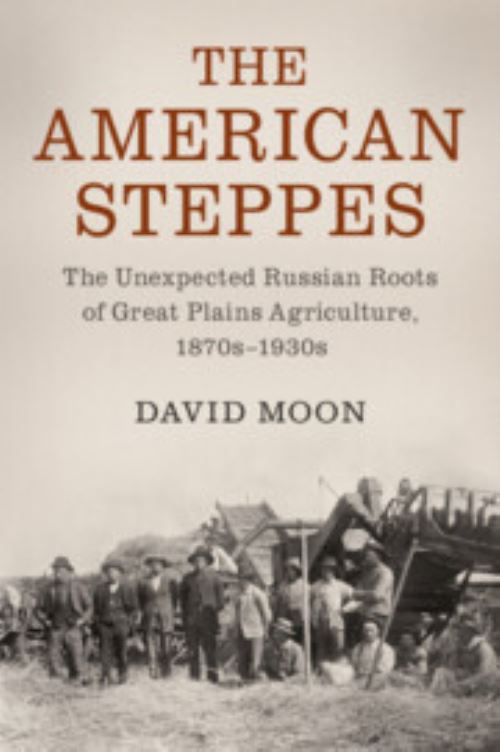
Beginning in the 1870s, migrant groups from Russia's steppes settled in the similar environment of the Great Plains. Many were Mennonites. They brought plants, in particular grain and fodder crops, trees and shrubs, as well as weeds.
Following their example, and drawing on the expertise of émigré Russian-Jewish scientists, the US Department of Agriculture introduced more plants, agricultural sciences, especially soil science; and methods of planting trees to shelter the land from the wind. By the 1930s, many of the grain varieties in the Great Plains had been imported from the steppes. The fertile soil was classified using the Russian term 'chernozem'.
The US Forest Service was planting shelterbelts using techniques pioneered in the steppes. And, tumbling across the plains was an invasive weed from the steppes: tumbleweed. Based on archival research in the United States, Russia, Ukraine, and Kazakhstan, this book explores the unexpected Russian roots of Great Plains agriculture.
| ISBN: | 9781107503205 |
| Publication date: | 27th October 2022 |
| Author: | David Moon |
| Publisher: | Cambridge University Press |
| Format: | Paperback |
| Pagination: | 471 pages |
| Series: | Studies in Environment and History |
| Genres: |
History of the Americas |
Beginning in the 1870s, migrant groups from Russia's steppes settled in the similar environment of the Great Plains. Many were Mennonites.
The American Steppes features in the following genres: History of the Americas
Paperback, Hardback. Not Available.
The American Steppes was written by David Moon and published by Cambridge University Press
The American Steppes has 471 pages
Yes it is part of Studies in Environment and History series