

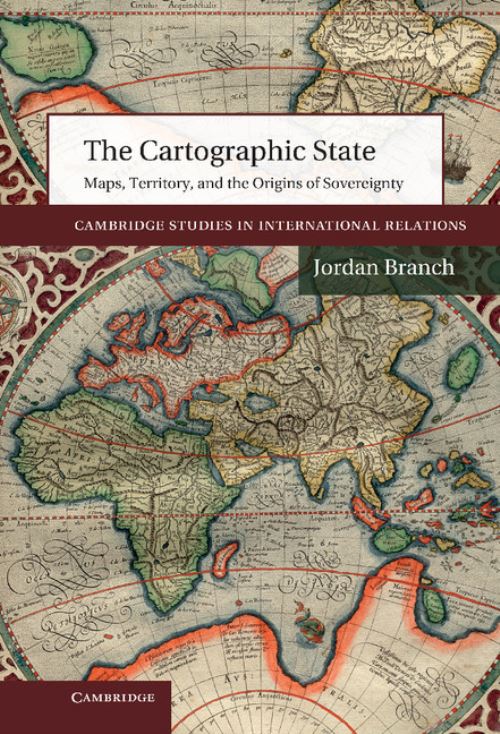
Why is today's world map filled with uniform states separated by linear boundaries? The answer to this question is central to our understanding of international politics, but the question is at the same time much more complex - and more revealing - than we might first think. This book examines the important but overlooked role played by cartography itself in the development of modern states.
Drawing upon evidence from the history of cartography, peace treaties and political practices, the book reveals that early modern mapping dramatically altered key ideas and practices among both rulers and subjects, leading to the implementation of linear boundaries between states and centralized territorial rule within them. In his analysis of early modern innovations in the creation, distribution and use of maps, Branch explains how the relationship between mapping and the development of modern territories shapes our understanding of international politics today.
| ISBN: | 9781107040960 |
| Publication date: | 28th November 2013 |
| Author: | Jordan Branch |
| Publisher: | Cambridge University Press |
| Format: | Hardback |
| Pagination: | 242 pages |
| Series: | Cambridge Studies in International Relations |
| Genres: |
International relations |
Why is today's world map filled with uniform states separated by linear boundaries? The answer to this question is central to our understanding of international politics, but the question is at the same time much more complex - and more revealing - than we might first think.
The Cartographic State features in the following genres: International relations
Hardback. Not Available.
The Cartographic State was written by Jordan Branch and published by Cambridge University Press
The Cartographic State has 242 pages
Yes it is part of Cambridge Studies in International Relations series