

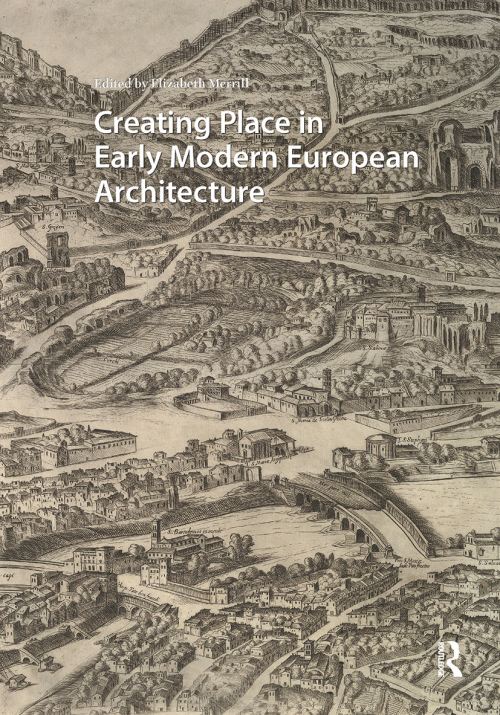
The importance of place - as a unique spatial identity - has been recognized since antiquity. Ancient references to the 'genius loci', or spirit of place, evoked not only the location of a distinct atmosphere or environment, but also the protection of this location, and implicitly, its making and construction. This volume examines the concept of place as it relates to architectural production and building knowledge in early modern Europe (1400-1800). The places explored in the book's ten essays take various forms, from an individual dwelling to a cohesive urban development to an extensive political territory. Within the scope of each study, the authors draw on primary source documents and original research to demonstrate the distinctive features of a given architectural place, and how these are related to a geographic location, social circumstances, and the contributions of individual practitioners. The essays underscore the distinct techniques, practices and organizational structures by which physical places were made in the early modern period.|An inquiry on place-making and architectural production in early modern Europe (1400-1750) Interdisciplinary methodology and critical approaches Thematic study that draws together subjects from throughout early modern Europe.
| ISBN: | 9781041177692 |
| Publication date: | 1st December 2025 |
| Author: | Elizabeth Merrill |
| Publisher: | Routledge an imprint of Taylor & Francis |
| Format: | Paperback |
| Pagination: | 378 pages |
| Series: | Visual and Material Culture, 1300-1700 |
| Genres: |
History of architecture History of science Civil engineering, surveying and building History and Archaeology |
The importance of place - as a unique spatial identity - has been recognized since antiquity. Ancient references to the 'genius loci', or spirit of place, evoked not only the location of a distinct atmosphere or environment, but also the protection of this location, and implicitly, its making and construction.
Creating Place in Early Modern European Architecture features in the following genres: History of architecture, History of science, Civil engineering, surveying and building, History and Archaeology
Paperback, Hardback. £43.19, down from the £47.99 cover price. Not Available.
Creating Place in Early Modern European Architecture was written by Elizabeth Merrill and published by Routledge an imprint of Taylor & Francis
Creating Place in Early Modern European Architecture has 378 pages
Yes it is part of Visual and Material Culture, 1300-1700 series
£43.19, reduced from £47.99. Not Available.