

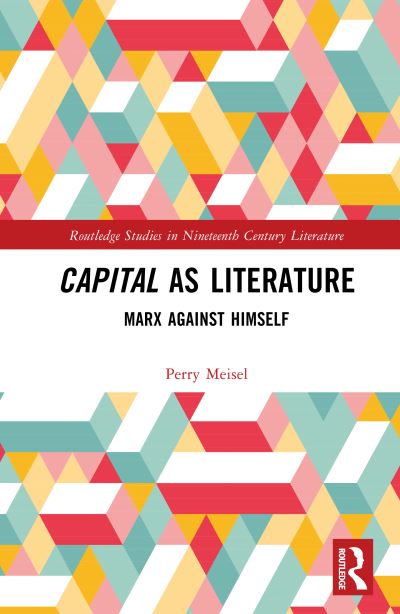
Studies of Marx, particularly of his masterwork Capital (1867), are as a rule tutelary-they attempt to explain him. Even literary readers of Marx, from Raymond Williams to Fredric Jameson, seek to secure Marxist tenets by means of Marxian style. 'Capital' as Literature: Marx Against Himself departs from this tradition by reading Capital as literary in its own right rather than as political economy with style as its filigree rather than its focus. Here, Marx emerges in a different light. If literature is writing that calls whatever is settled into question, then Marx's writing is literature, not because of its revolutionary program, but because Marx's rhetoric, particularly its key trope of chiasmus, undoes the coherence of the notions it propounds, especially in Capital. Marx's chiasmatic style turns Capital into a mise en abyme and Marx's enterprise into an example of what it describes rather than its foil or antidote: the structure of capital itself. Capital, like capital, is a self-begetting production machine whose fungibility as a form is one and the same with the money economy it unravels. 'Capital' as Literature: Marx Against Himself shows how this irony unfolds and what the implications are for epistemology, cultural studies, and literary criticism.
| ISBN: | 9781041173939 |
| Publication date: | 24th April 2026 |
| Author: | Perry Meisel |
| Publisher: | Routledge an imprint of Taylor & Francis |
| Format: | Hardback |
| Pagination: | 200 pages |
| Series: | Routledge Studies in Nineteenth Century Literature |
| Genres: |
Literary studies: c 1800 to c 1900 Literary theory |
Studies of Marx, particularly of his masterwork Capital (1867), are as a rule tutelary-they attempt to explain him. Even literary readers of Marx, from Raymond Williams to Fredric Jameson, seek to secure Marxist tenets by means of Marxian style.
Capital as Literature features in the following genres: Literary studies: c 1800 to c 1900, Literary theory
Hardback. £154.79, down from the £171.99 cover price. Not Available.
Capital as Literature was written by Perry Meisel and published by Routledge an imprint of Taylor & Francis
Capital as Literature has 200 pages
Yes it is part of Routledge Studies in Nineteenth Century Literature series
£154.79, reduced from £171.99. Not Available.