

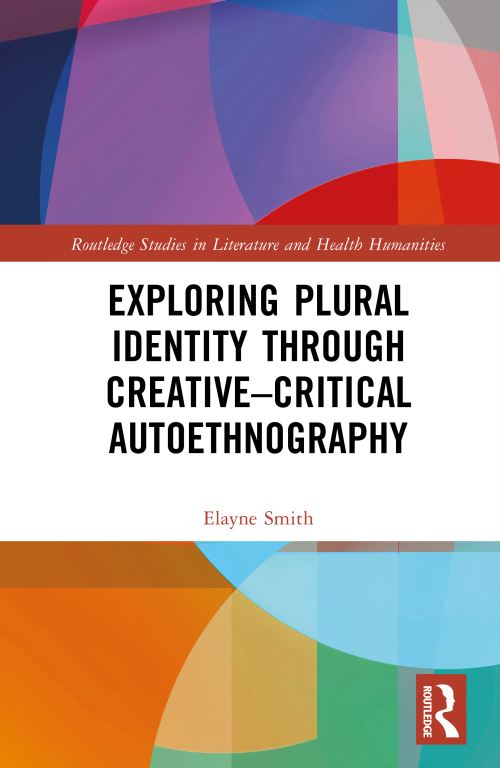
This book rethinks the relationship between creative practice and critical inquiry in mental health writing. Combining scholarly analysis with lived experience, it develops a distinctive account of dissociative identity disorder, positioning plural subjectivity not only as its subject, but also as its method. The work blends evocative and analytical approaches to explore how writing can embody unknowing, rupture, and difference: What becomes of life writing and identity processing when memory is discontinuous? Focusing on the often-overlooked early stages of the therapeutic journey- help-seeking, psychoeducation, and meaning-making before "living well" narratives take hold- it engages critically with life writing, memoir, autobiography, and autoethnography, while interrogating the social, clinical, and media frameworks that shape understandings of Dissociative Identity Disorder (DID), one of the most marginalised forms of neurodiversity. The text theorises as it feels and critiques as it creates, ultimately asking what it means to write-and to be written by-plurality. It will appeal to scholars in the Health Humanities, Literary Studies, especially those with interests in narrative theory and experimental autoethnography, as well as psychologists and sociologists interested in neurodiversity, dissociation, and writing therapy.
| ISBN: | 9781041127277 |
| Publication date: | 17th August 2026 |
| Author: | Elayne Smith |
| Publisher: | Routledge an imprint of Taylor & Francis |
| Format: | Hardback |
| Pagination: | 256 pages |
| Series: | Routledge Studies in Literature and Health Humanities |
| Genres: |
Literary studies: general Literary theory |
This book rethinks the relationship between creative practice and critical inquiry in mental health writing. Combining scholarly analysis with lived experience, it develops a distinctive account of dissociative identity disorder, positioning plural subjectivity not only as its subject, but also as its method.
Exploring Plural Identity Through Creative-Critical Autoethnography features in the following genres: Literary studies: general, Literary theory
Hardback. £154.79, down from the £171.99 cover price. Not Available.
Exploring Plural Identity Through Creative-Critical Autoethnography was written by Elayne Smith and published by Routledge an imprint of Taylor & Francis
Exploring Plural Identity Through Creative-Critical Autoethnography has 256 pages
Yes it is part of Routledge Studies in Literature and Health Humanities series
£154.79, reduced from £171.99. Not Available.