

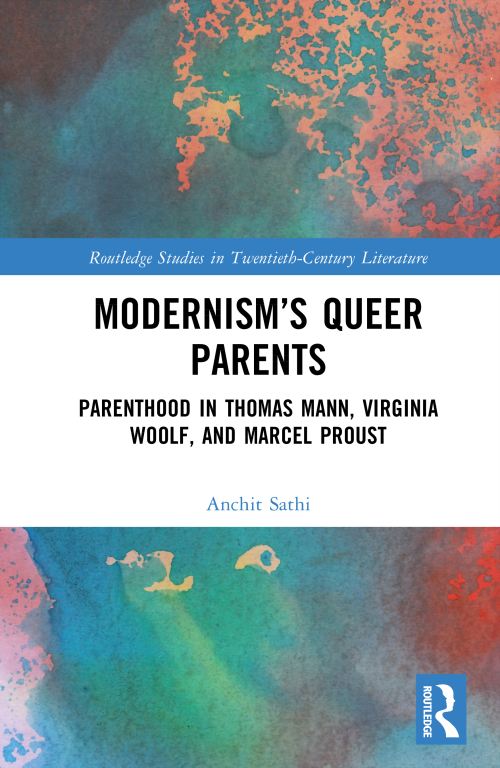
This volume offers the first critical examination of how societal pressures compelling individuals towards parenthood are experienced, processed, and enacted by queer characters in selected works by Thomas Mann, Virginia Woolf, and Marcel Proust-authors now widely regarded as queer, despite not having claimed such an identity in their own time. The selected texts include Mann's Chaotic World and Childhood Sorrow and Death in Venice, Woolf's Mrs Dalloway and Orlando, and key sections from Proust's In Search of Lost Time. By engaging these texts in a pairwise dialogue, this book argues that Mann, Woolf, and Proust employ a shared repertoire of motifs and narrative strategies to depict queer characters' struggles with the institution of parenthood. However, it contends that each author articulates a distinct and nuanced approach to this theme, shaped in part by the specific cultural contexts in which they wrote. To substantiate this argument, the monograph draws on insights from queer theory, metaphor theory, and the social sciences, predominantly from late twentieth- and early twenty-first-century scholarship, thereby reinforcing its commitment to linking literary modernism to contemporary lived realities. At the same time, the analysis situates these works within the broader socio-historical framework of the early twentieth century, which is to say the modernist period, with which these authors are conventionally associated.
| ISBN: | 9781041121855 |
| Publication date: | 2nd December 2025 |
| Author: | Anchit Sathi |
| Publisher: | Routledge an imprint of Taylor & Francis |
| Format: | Hardback |
| Pagination: | 248 pages |
| Series: | Routledge Studies in Twentieth-Century Literature |
| Genres: |
Literary studies: c 1900 to c 2000 Literary theory |
This volume offers the first critical examination of how societal pressures compelling individuals towards parenthood are experienced, processed, and enacted by queer characters in selected works by Thomas Mann, Virginia Woolf, and Marcel Proust-authors now widely regarded as queer, despite not having claimed such an identity in their own time. The selected texts include Mann's Chaotic World and Childhood Sorrow and Death in Venice, Woolf's Mrs Dalloway and Orlando, and key sections from Proust's In Search of Lost Time.
Modernism's Queer Parents features in the following genres: Literary studies: c 1900 to c 2000, Literary theory
Hardback. £154.79, down from the £171.99 cover price. Not Available.
Modernism's Queer Parents was written by Anchit Sathi and published by Routledge an imprint of Taylor & Francis
Modernism's Queer Parents has 248 pages
Yes it is part of Routledge Studies in Twentieth-Century Literature series
£154.79, reduced from £171.99. Not Available.