

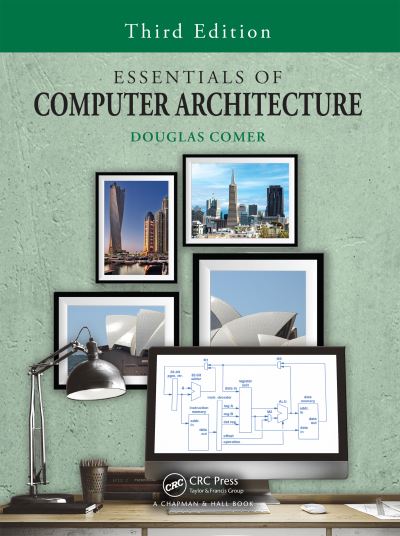
This easy-to-read textbook provides an introduction to computer architecture, focusing on the essential aspects of hardware that programmers need to know. Written from a programmer's point of view, Essentials of Computer Architecture, Third Edition, covers the three key aspects of architecture: processors, physical and virtual memories, and input-output (I/O) systems.
This third edition is updated in view of advances in the field. Most students only have experience with high-level programming languages, and almost no experience tinkering with electronics and hardware. As such, this text is revised to follow a top-down approach, moving from discussions on how a compiler transforms a source program into binary code and data, to explanations of how a computer represents data and code in binary.
Additional chapters cover parallelism and data pipelining, assessing the performance of computer systems, and the important topic of power and energy consumption. Exclusive to this third edition, a new chapter explains multicore processors and how coherence hardware provides a consistent view of the values in memory even though each core has its own cache.
Suitable for a one-semester undergraduate course, this clear, concise, and easy-to-read textbook offers an ideal introduction to computer architecture for students studying computer programming.
| ISBN: | 9781032727196 |
| Publication date: | 20th May 2024 |
| Author: | Douglas Comer |
| Publisher: | Chapman & Hall/CRC an imprint of CRC Press |
| Format: | Hardback |
| Pagination: | 536 pages |
| Genres: |
Information technology: general topics Computer architecture and logic design Computer programming / software engineering |
This easy-to-read textbook provides an introduction to computer architecture, focusing on the essential aspects of hardware that programmers need to know. Written from a programmer's point of view, Essentials of Computer Architecture, Third Edition, covers the three key aspects of architecture: processors, physical and virtual memories, and input-output (I/O) systems.This third edition is updated in view of advances in the field.
Essentials of Computer Architecture features in the following genres: Information technology: general topics, Computer architecture and logic design, Computer programming / software engineering
Paperback, Hardback, Ebook. £78.29, down from the £86.99 cover price. Not Available.
Essentials of Computer Architecture was written by Douglas Comer and published by Chapman & Hall/CRC an imprint of CRC Press
Essentials of Computer Architecture has 536 pages
£78.29, reduced from £86.99. Not Available.