

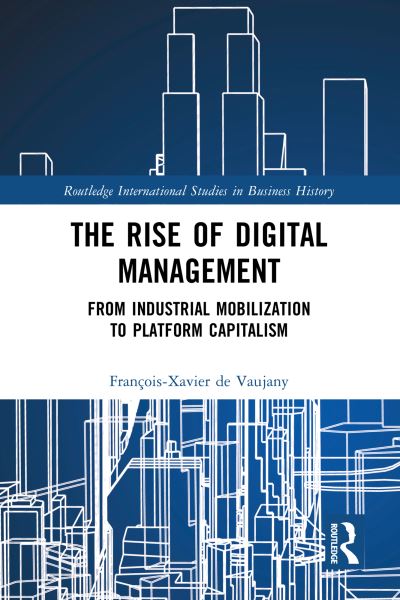
This book analyzes the history of management, placing it in perspective with both American history and the genealogy of digital technology. Focusing on the years of industrial mobilization in the United States (from 1937 to 1945) and their extension into the Cold War, it shows particularly how "scientific management" was reconfigured and re-legitimized in favor of a new profoundly American geopolitics. In a context where the future was at a standstill, this research also explains what became of the managerial processes at the heart of capitalism from the 40s onwards: the shift from a managerial capitalism of calculation to a narrative capitalism made up of "desiring machines". This digital management no longer simply contributes, along with others, to unveiling and revealing the future. Aligned with the American obsession with novelty, it is the very process of revelation and unveiling, with managers and consumers alike becoming the intersecting subjects of desires borne of managerial apocalypses.To explore this period of American history, the author has combined a triple narrative anchored in three types of archives: an intimate history of this reconfiguration from the presence in New York of Saint-Exupéry, Burnham and Wiener; a description of the great historical moment of industrial mobilization; and a philosophical speculation about reconfiguration and its links to American history.
| ISBN: | 9781032707792 |
| Publication date: | 26th December 2025 |
| Author: | FrançoisXavier de Vaujany |
| Publisher: | Routledge an imprint of Taylor & Francis |
| Format: | Paperback |
| Pagination: | 242 pages |
| Series: | Routledge International Studies in Business History |
| Genres: |
Operational research Research and development management Sociology: work and labour Business strategy Organizational theory and behaviour |
This book analyzes the history of management, placing it in perspective with both American history and the genealogy of digital technology. Focusing on the years of industrial mobilization in the United States (from 1937 to 1945) and their extension into the Cold War, it shows particularly how "scientific management" was reconfigured and re-legitimized in favor of a new profoundly American geopolitics. In a context where the future was at a standstill, this research also explains what became of the managerial processes at the heart of capitalism from the 40s onwards: the shift from a managerial capitalism of calculation to a narrative capitalism made up of "desiring machines". This digital management no longer simply contributes, along with others, to unveiling and revealing the future. Aligned with the American obsession with novelty, it is the very process of revelation and unveiling, with managers and consumers alike becoming the intersecting subjects of desires borne of managerial apocalypses.To explore this period of American history, the author has combined a triple narrative anchored in three types of archives: an intimate history of this reconfiguration from the presence in New York of Saint-Exupéry, Burnham and Wiener; a description of the great historical moment of industrial mobilization; and a philosophical speculation about reconfiguration and its links to American history.
The Rise of Digital Management features in the following genres: Operational research, Research and development management, Sociology: work and labour, Business strategy, Organizational theory and behaviour
The Rise of Digital Management is available in Paperback, Hardback
The Rise of Digital Management was written by FrançoisXavier de Vaujany and published by Routledge an imprint of Taylor & Francis
The Rise of Digital Management has 242 pages
Yes it is part of Routledge International Studies in Business History series
£41.39