

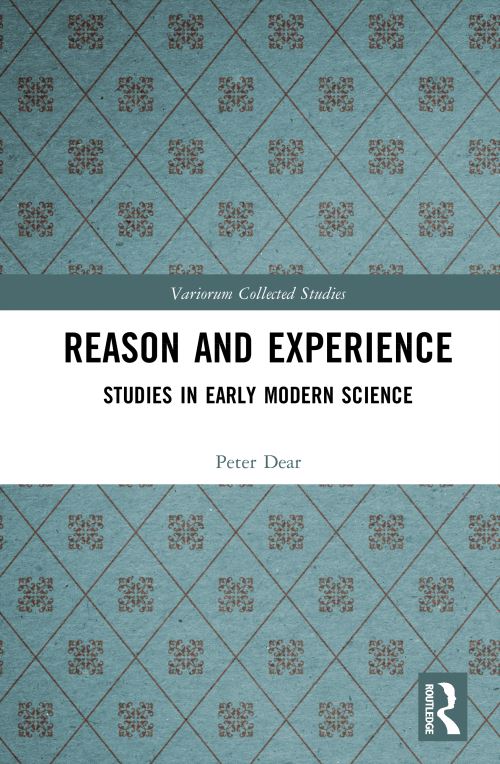
Early modern Europe witnessed the rise of new ways of creating knowledge of the natural world, ways often encapsulated by historians under the label "Scientific Revolution." The studies in this book investigate some of the most fundamental of these novelties, concentrating especially on the epistemological themes of "experience" and "reason." The practical reformation of those themes was to give rise to new forms of experimental science, as well as new ways of understanding mathematical sciences of nature.
Taken together, such novelties contributed to the emergence of the characteristic approaches of modern science, which distinguish it as an enterprise that combines practical knowledge with speculative theoretical means of understanding the nature of the universe. Scientifically usable experience came in the seventeenth century to take on the characteristic form of the experimental report, in which an historical account of some event or process was processed in such a way as to render it universalizable, and hence conformable to well-understood Aristotelian accounts of scientific knowledge.
The result was a new style of experimental science that emphasized reportable events, typically shareable with a wider community of natural philosophers. At the same time, self-conscious philosophical understandings of "reason" served as the means of justifying the necessary universalizability of experimental reports. The studies on these themes that make up the book will be of interest to historians and philosophers of science, as well as scholars concerned with the practical historical development of scientific practices.
| ISBN: | 9781032643403 |
| Publication date: | 16th December 2026 |
| Author: | Peter Dear |
| Publisher: | Routledge an imprint of Taylor & Francis |
| Format: | Hardback |
| Pagination: | 268 pages |
| Series: | Variorum Collected Studies |
| Genres: |
History and Archaeology Historiography Philosophy of science History of science Philosophical traditions and schools of thought |
Taken together, such novelties contributed to the emergence of the characteristic approaches of modern science, which distinguish it as an enterprise that combines practical knowledge with speculative theoretical means of understanding the nature of the universe. Scientifically usable experience came in the seventeenth century to take on the characteristic form of the experimental report, in which an historical account of some event or process was processed in such a way as to render it universalizable, and hence conformable to well-understood Aristotelian accounts of scientific knowledge.
Reason and Experience features in the following genres: History and Archaeology, Historiography, Philosophy of science, History of science, Philosophical traditions and schools of thought
Hardback. £154.79, down from the £171.99 cover price. Not Available.
Reason and Experience was written by Peter Dear and published by Routledge an imprint of Taylor & Francis
Reason and Experience has 268 pages
Yes it is part of Variorum Collected Studies series
£154.79, reduced from £171.99. Not Available.