

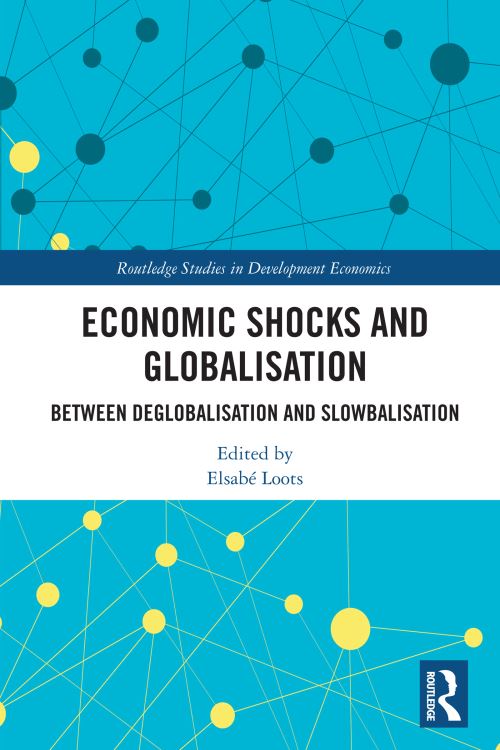
Over the 153-year period since 1870, the phenomenon of globalisation has been shaped and reshaped. As we look back at the events that shaped our understanding of the process and its momentum before and after the Global Financial Crisis (GFC), it became clear that the process of globalisation has changed and continues to evolve, which requires a deeper analysis. The book answers the question of why the performance of the hyper-globalisation period has not continued during the post-GFC period after 2010, and what might be expected going forward. Apart from the fact that the fourth globalisation wave period between 2010 to the early 2020s has been characterised by a range of global shocks that caused more volatility, instability, and uncertainty, the major economic determinants of globalisation have also slowed markedly. The outbreak of the COVID-19 pandemic, followed by the geopolitical uncertainty and instability all caused global contagion effects around the world, with economic, socio-economic, and geopolitical consequences and responses.
This book aims to analyse most of these global events and shocks and attempted to gather a deeper understanding of the present drivers of globalisation and what the major trends and shifts are geo-economically, socio-economically, and geopolitically. The conclusions drawn include that globalisation remains, despite the current slowbalisation, an integrated process that is globally entrenched, yet complex, cyclical, multifaceted and multiplex.
This book is aimed at academics in economics, political sciences, social sciences, and may also find an audience among international policymakers and scholars at multilateral institutions such as the World Bank and the United Nations.
| ISBN: | 9781032607665 |
| Publication date: | 22nd May 2026 |
| Author: | Elsabé Loots |
| Publisher: | Routledge an imprint of Taylor & Francis |
| Format: | Paperback |
| Pagination: | 262 pages |
| Series: | Routledge Studies in Development Economics |
| Genres: |
International economics Geopolitics Economic history |
Over the 153-year period since 1870, the phenomenon of globalisation has been shaped and reshaped. As we look back at the events that shaped our understanding of the process and its momentum before and after the Global Financial Crisis (GFC), it became clear that the process of globalisation has changed and continues to evolve, which requires a deeper analysis.
Economic Shocks and Globalisation features in the following genres: International economics, Geopolitics, Economic history
Paperback, Hardback. £43.19, down from the £47.99 cover price. Not Available.
Economic Shocks and Globalisation was written by Elsabé Loots and published by Routledge an imprint of Taylor & Francis
Economic Shocks and Globalisation has 262 pages
Yes it is part of Routledge Studies in Development Economics series
£43.19, reduced from £47.99. Not Available.