

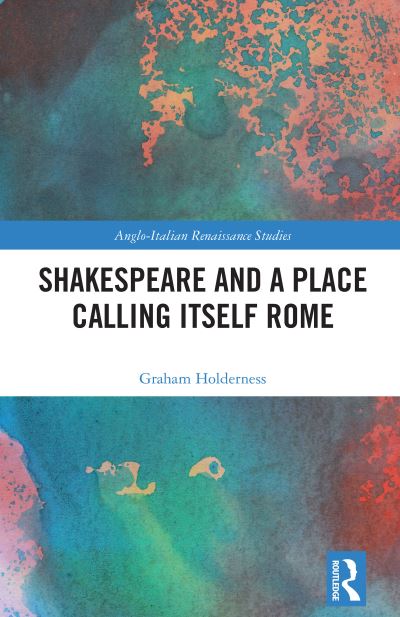
This new examination of Shakespeare's four Roman tragedies (Julius Caesar, Titus Andronicus, Coriolanus and Antony and Cleopatra) revisits Shakespeare's dramatic recreations of ancient Rome in the light of considerations of place:
Alongside this analysis the book explores contemporary critical debates and the uses of place and space in selected modern adaptations - the Taviani brothers' Italian film Caesar Must Die, Julie Taylor's film Titus, John Osborne's play A Place Calling Itself Rome and Ahmed Shawqi's Arabic Death of Cleopatra.
The book provides a descriptive, palimpsestic map of the places within which Shakespeare's Roman plays operate, tracing the contours of Rome's Republic and Empire, overlaid with the Europe of Shakespeare's day, in which a Romanised London looked with fascination towards the East, towards Rome and Alexandria. Equipped with such a map we can attempt to do what Shakespeare did: to recreate ancient Rome in conjunction and rapprochement with its early modern and modern counterparts.
| ISBN: | 9781032578132 |
| Publication date: | 30th June 2025 |
| Author: | Graham Holderness |
| Publisher: | Routledge an imprint of Taylor & Francis |
| Format: | Hardback |
| Pagination: | 210 pages |
| Series: | Anglo-Italian Renaissance Studies |
| Genres: |
Classic and pre-20th century plays Literary studies: general |
This new examination of Shakespeare's four Roman tragedies (Julius Caesar, Titus Andronicus, Coriolanus and Antony and Cleopatra) revisits Shakespeare's dramatic recreations of ancient Rome in the light of considerations of place: the places from which Shakespeare initiated his imaginative reconstructions, where plays are written and performed the places he constructed within the plays, the places the plays imagine and recreate, together with the places from which he derived them the places within which we as readers and spectators experience those creations, where such plays are read, viewed and critically analysed. Alongside this analysis the book explores contemporary critical debates and the uses of place and space in selected modern adaptations - the Taviani brothers' Italian film Caesar Must Die, Julie Taylor's film Titus, John Osborne's play A Place Calling Itself Rome and Ahmed Shawqi's Arabic Death of Cleopatra.The book provides a descriptive, palimpsestic map of the places within which Shakespeare's Roman plays operate, tracing the contours of Rome's Republic and Empire, overlaid with the Europe of Shakespeare's day, in which a Romanised London looked with fascination towards the East, towards Rome and Alexandria.
Shakespeare and a Place Calling Itself Rome features in the following genres: Classic and pre-20th century plays, Literary studies: general
Paperback, Hardback. £154.79, down from the £171.99 cover price. Not Available.
Shakespeare and a Place Calling Itself Rome was written by Graham Holderness and published by Routledge an imprint of Taylor & Francis
Shakespeare and a Place Calling Itself Rome has 210 pages
Yes it is part of Anglo-Italian Renaissance Studies series
£154.79, reduced from £171.99. Not Available.