

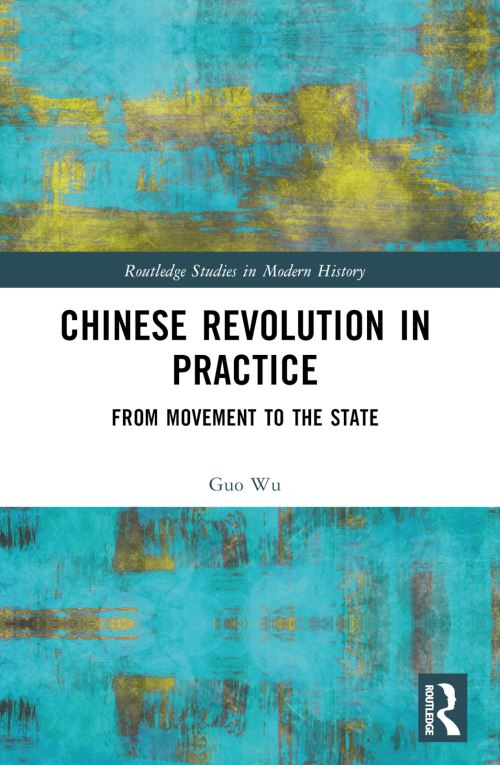
This book employs multiple case studies to explore how the Chinese communist revolution began as an ideology-oriented intellectual movement aimed at improving society before China's transformation into a state that suppresses dissenting voices by outsourcing its power of coercion and incarceration.
The author examines the movement's methods of early self-organization, grass-roots level engagement, creation of new modes of expression and popular art forms, manipulation of collective memory, and invention of innovative ways of mass incarceration. Covering developments from 1920 to 1970, the book considers a wide range of Chinese individuals and groups, from early Marxists to political prisoners in the PRC, to illustrate a dynamic, interactive process in which the state and individuals contend with each other. It argues that revolutionary practices in modern China have created a regime that can be conceptualized as an "ideology-military-propaganda" state that prompts further reflection on the relationships between revolution and the state, the state and collective articulation and memory, and the state and reflective individuals in a global context.
Illustrating the continuity of the Chinese revolution and past decades' socialist practices and mechanisms, this study is an ideal resource for scholars of Chinese history, politics, and twentieth-century revolutions.
| ISBN: | 9781032576213 |
| Publication date: | 27th May 2025 |
| Author: | Guo Wu |
| Publisher: | Routledge an imprint of Taylor & Francis |
| Format: | Paperback |
| Pagination: | 170 pages |
| Series: | Routledge Studies in Modern History |
| Genres: |
Cold wars and proxy conflicts Social and political philosophy Far-left political ideologies and movements Regional / International studies Asian history History and Archaeology |
This book employs multiple case studies to explore how the Chinese communist revolution began as an ideology-oriented intellectual movement aimed at improving society before China's transformation into a state that suppresses dissenting voices by outsourcing its power of coercion and incarceration.
The author examines the movement's methods of early self-organization, grass-roots level engagement, creation of new modes of expression and popular art forms, manipulation of collective memory, and invention of innovative ways of mass incarceration. Covering developments from 1920 to 1970, the book considers a wide range of Chinese individuals and groups, from early Marxists to political prisoners in the PRC, to illustrate a dynamic, interactive process in which the state and individuals contend with each other. It argues that revolutionary practices in modern China have created a regime that can be conceptualized as an "ideology-military-propaganda" state that prompts further reflection on the relationships between revolution and the state, the state and collective articulation and memory, and the state and reflective individuals in a global context.
Illustrating the continuity of the Chinese revolution and past decades' socialist practices and mechanisms, this study is an ideal resource for scholars of Chinese history, politics, and twentieth-century revolutions.
Chinese Revolution in Practice features in the following genres: Cold wars and proxy conflicts, Social and political philosophy, Far-left political ideologies and movements, Regional / International studies, Asian history, History and Archaeology
Chinese Revolution in Practice is available in Paperback
Chinese Revolution in Practice was written by Guo Wu and published by Routledge an imprint of Taylor & Francis
Chinese Revolution in Practice has 170 pages
Yes it is part of Routledge Studies in Modern History series
£43.19