

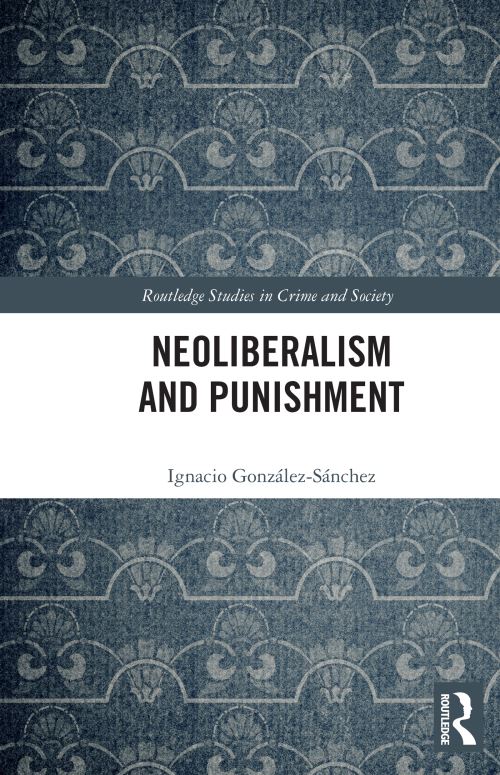
Exploring the expansion of the penal system in Spain during the first 40 years of democracy, this book puts forward the importance of studying punishment from a sociological perspective and examines the neoliberal penality thesis.
Today, Spain has more police officers and more people in prison than 50 years ago and a tougher penal code than that which existed at Franco's death; however, crime has not increased for three decades, while most of the hardening of the penal system has occurred after its stabilisation. Studying the development of penality in Spanish democracy, this book explores Loïc Wacquant's proposal that the expansion of the penal system should be understood as a characteristic of neoliberalism. It examines the parallel and reciprocal development of three policies in relation to the gradual implementation of neoliberal ideas and highlights how the evolution of the labour market, social policies, and the penal system are linked to one another and to neoliberal ideas related to the sacralisation of the utilitarian individual and the role of the state.
Advocating for a sociological study of state punishment and contributing to a better understanding of the implementation of neoliberal policies, Neoliberalism and Punishment will be of great interest to students and scholars of criminology, sociology, and politics.
| ISBN: | 9781032522098 |
| Publication date: | 27th October 2025 |
| Author: | Ignacio González Sánchez |
| Publisher: | Routledge an imprint of Taylor & Francis |
| Format: | Paperback |
| Pagination: | 170 pages |
| Series: | Routledge Studies in Crime and Society |
| Genres: |
Sentencing and punishment Social and political philosophy Sociology Crime and criminology Legal aspects of criminology Politics and government |
Exploring the expansion of the penal system in Spain during the first 40 years of democracy, this book puts forward the importance of studying punishment from a sociological perspective and examines the neoliberal penality thesis.
Today, Spain has more police officers and more people in prison than 50 years ago and a tougher penal code than that which existed at Franco's death; however, crime has not increased for three decades, while most of the hardening of the penal system has occurred after its stabilisation. Studying the development of penality in Spanish democracy, this book explores Loïc Wacquant's proposal that the expansion of the penal system should be understood as a characteristic of neoliberalism. It examines the parallel and reciprocal development of three policies in relation to the gradual implementation of neoliberal ideas and highlights how the evolution of the labour market, social policies, and the penal system are linked to one another and to neoliberal ideas related to the sacralisation of the utilitarian individual and the role of the state.
Advocating for a sociological study of state punishment and contributing to a better understanding of the implementation of neoliberal policies, Neoliberalism and Punishment will be of great interest to students and scholars of criminology, sociology, and politics.
Neoliberalism and Punishment features in the following genres: Sentencing and punishment, Social and political philosophy, Sociology, Crime and criminology, Legal aspects of criminology, Politics and government
Neoliberalism and Punishment is available in Paperback, Hardback
Neoliberalism and Punishment was written by Ignacio González Sánchez and published by Routledge an imprint of Taylor & Francis
Neoliberalism and Punishment has 170 pages
Yes it is part of Routledge Studies in Crime and Society series
£43.19