

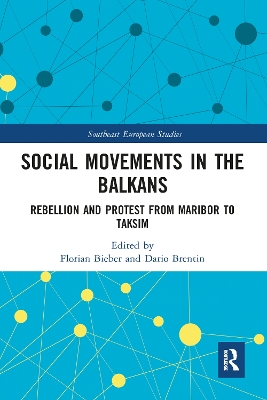
From Slovenia to Turkey, social movements and protests have shaken the political systems of Southeast Europe. Confronting issues such as austerity, the provision and privatisation of welfare, public utilities and public space, corruption, bureaucratic inefficiency, environmental concerns and authoritarian tendencies, these revolts have also served as conduits for broader social and political discontent. While they have contributed to the defeat of unpopular policies and practices and the fall of governments, perhaps their most significant impact has been in creating dynamic political and social actors and contributing to the realignment of the political space. This volume sheds new light on the wave of protests and emerging social movements. Placing individual protests in a wider context, it highlights connections between different social movements and discusses parallels with similar movements from recent history. The contributors include both well-established scholars and up-and-coming researchers who engage with both activist and academic perspectives to identify the similar and varying dynamics of both the protests and the governments’ responses to them. Building upon studies of social movements, the book will be of interest to scholars examining political dissent, protests and mechanisms of mobilisation in the region.
| ISBN: | 9781032095103 |
| Publication date: | 30th June 2021 |
| Author: | Florian University of Graz, Austria Bieber |
| Publisher: | Routledge an imprint of Taylor & Francis Ltd |
| Format: | Paperback |
| Pagination: | 200 pages |
| Series: | Southeast European Studies |
| Genres: |
Pressure groups, protest movements and non-violent action European history |
From Slovenia to Turkey, social movements and protests have shaken the political systems of Southeast Europe. Confronting issues such as austerity, the provision and privatisation of welfare, public utilities and public space, corruption, bureaucratic inefficiency, environmental concerns and authoritarian tendencies, these revolts have also served as conduits for broader social and political discontent. While they have contributed to the defeat of unpopular policies and practices and the fall of governments, perhaps their most significant impact has been in creating dynamic political and social actors and contributing to the realignment of the political space. This volume sheds new light on the wave of protests and emerging social movements. Placing individual protests in a wider context, it highlights connections between different social movements and discusses parallels with similar movements from recent history. The contributors include both well-established scholars and up-and-coming researchers who engage with both activist and academic perspectives to identify the similar and varying dynamics of both the protests and the governments’ responses to them. Building upon studies of social movements, the book will be of interest to scholars examining political dissent, protests and mechanisms of mobilisation in the region.
Social Movements in the Balkans features in the following genres: Pressure groups, protest movements and non-violent action, European history
Social Movements in the Balkans is available in Paperback
Social Movements in the Balkans was written by Florian University of Graz, Austria Bieber and published by Routledge an imprint of Taylor & Francis Ltd
Social Movements in the Balkans has 200 pages
Yes it is part of Southeast European Studies series
£40.49