

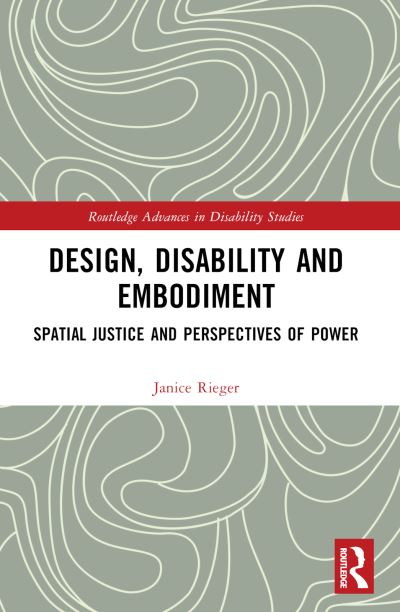
This timely book explores the spatial and social injustices within our streets, malls, schools, and public institutions. Taken-for-granted acts like going for a walk, seeing an exhibition with a friend, and going to school are, for people with disabilities, conditional or precluded acts due to exclusion by design.
This book stimulates debate and discussion about current practice and studies in spatial design in the context of disability and the growing need for inclusive design globally. Case studies of inclusive design in spaces like museums, malls, galleries and universities are presented to challenge and expose the perspectives of power and spatial injustices that still exist within these spaces today. The international case studies presented purposely privilege the voices and perspectives of people with disabilities, to expose the multisensorial perspectives of spatial justice in order to understand inclusion more holistically through embodiment.
If you are an architect, designer, arts educator, curator or museum professional or just want a world where spatial justice is possible, then this book will provide you with a new perspective of spatial design through critical disability studies, allyship and codesign, where tangible approaches and practices for inclusive design are explored.
| ISBN: | 9781032076997 |
| Publication date: | 29th November 2024 |
| Author: | Janice Rieger |
| Publisher: | Routledge an imprint of Taylor & Francis |
| Format: | Paperback |
| Pagination: | 122 pages |
| Series: | Routledge Advances in Disability Studies |
| Genres: |
Personal and public health / health education Disability: social aspects Sociology Museology and heritage studies Design, Industrial and commercial arts, illustration |
This timely book explores the spatial and social injustices within our streets, malls, schools, and public institutions. Taken-for-granted acts like going for a walk, seeing an exhibition with a friend, and going to school are, for people with disabilities, conditional or precluded acts due to exclusion by design.
This book stimulates debate and discussion about current practice and studies in spatial design in the context of disability and the growing need for inclusive design globally. Case studies of inclusive design in spaces like museums, malls, galleries and universities are presented to challenge and expose the perspectives of power and spatial injustices that still exist within these spaces today. The international case studies presented purposely privilege the voices and perspectives of people with disabilities, to expose the multisensorial perspectives of spatial justice in order to understand inclusion more holistically through embodiment.
If you are an architect, designer, arts educator, curator or museum professional or just want a world where spatial justice is possible, then this book will provide you with a new perspective of spatial design through critical disability studies, allyship and codesign, where tangible approaches and practices for inclusive design are explored.
Design, Disability and Embodiment features in the following genres: Personal and public health / health education, Disability: social aspects, Sociology, Museology and heritage studies, Design, Industrial and commercial arts, illustration
Design, Disability and Embodiment is available in Paperback, Hardback
Design, Disability and Embodiment was written by Janice Rieger and published by Routledge an imprint of Taylor & Francis
Design, Disability and Embodiment has 122 pages
Yes it is part of Routledge Advances in Disability Studies series
£42.29