

The development of the first city-specific typeface
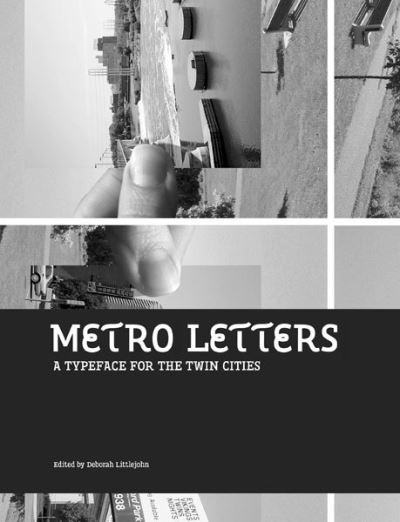
Can a typeface communicate the unique character of a city? This is the question the University of Minnesota Design Institute proposed when it began the project “Typeface: Twin Cities” and commissioned six teams of talented typographers to create a custom font for Minneapolis and St. Paul. “Typeface: Twin Cities” was an experiment to further understand the relationship between typography and urban identity that sought not to brand the cities themselves but to engage the public's awareness and appreciation of design and typography throughout the metro area.
What began as an attempt to discover a subtle form of civic identity evolved into the invention of a truly unique concept. The Twin font is accompanied by a software program that can link the typeface via the Internet with live databases detailing the Twin Cities's urban conditions-wind, temperature, traffic congestion-and these variations visibly affect the type's appearance. Metro Letters recounts the complete process behind the development of a font that aims to visually represent the diversity of the Twin Cities and inspires other designers to devise their own new ideas, innovative prototypes, and creative experiments.Distributed for the University of Minnesota Design Institute| ISBN: | 9780972969611 |
| Publication date: | 6th August 2003 |
| Author: | University of Minnesota |
| Publisher: | University of Minnesota Design Institute an imprint of University Of Minnesota Press |
| Format: | Paperback |
| Pagination: | 160 pages |
| Genres: |
Typography and lettering |
The development of the first city-specific typeface
Can a typeface communicate the unique character of a city? This is the question the University of Minnesota Design Institute proposed when it began the project “Typeface: Twin Cities” and commissioned six teams of talented typographers to create a custom font for Minneapolis and St. Paul. “Typeface: Twin Cities” was an experiment to further understand the relationship between typography and urban identity that sought not to brand the cities themselves but to engage the public's awareness and appreciation of design and typography throughout the metro area.
What began as an attempt to discover a subtle form of civic identity evolved into the invention of a truly unique concept. The Twin font is accompanied by a software program that can link the typeface via the Internet with live databases detailing the Twin Cities's urban conditions-wind, temperature, traffic congestion-and these variations visibly affect the type's appearance. Metro Letters recounts the complete process behind the development of a font that aims to visually represent the diversity of the Twin Cities and inspires other designers to devise their own new ideas, innovative prototypes, and creative experiments.Distributed for the University of Minnesota Design InstituteMetro Letters features in the following genres: Typography and lettering
Metro Letters is available in Paperback
Metro Letters was written by University of Minnesota and published by University of Minnesota Design Institute an imprint of University Of Minnesota Press
Metro Letters has 160 pages