

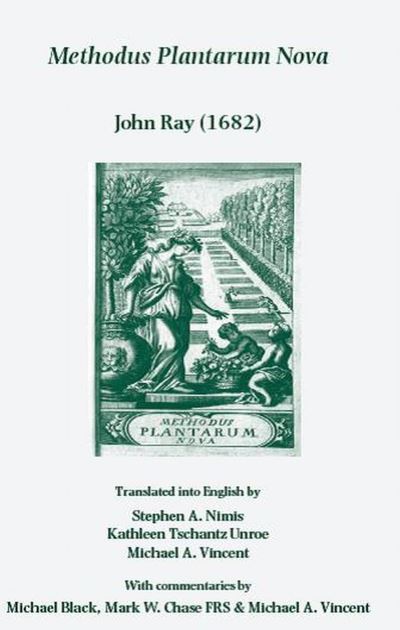
| ISBN: | 9780903874465 |
| Publication date: | 29th June 2015 |
| Author: | John Ray |
| Publisher: | Ray Society |
| Format: | Hardback |
| Pagination: | 182 pages |
| Series: | The Ray Society |
| Genres: |
Botany and plant sciences |
John Ray (1627-1705) contributed several important concepts to the field of plant taxonomy: first, the division of plants into groups based on seed leaves (Monocotyledonae and Dicotyledonae); second, the differentiation between flowering and flowerless plants; third, the use of the term "petal" to designate the "leaf " of the flower; fourth, the use of stamens and pistils in plant classification, anticipating the emphasis of Linnaeus. Ray worked towards a natural classification of plants that was based on more than one "data set": classification should not use a single character but ideally should make use of as much information as was available for as many parts of the plant as possible.
Methodus Plantarum Nova features in the following genres: Botany and plant sciences
Hardback. Not Available.
Methodus Plantarum Nova was written by John Ray and published by Ray Society
Methodus Plantarum Nova has 182 pages
Yes it is part of The Ray Society series