

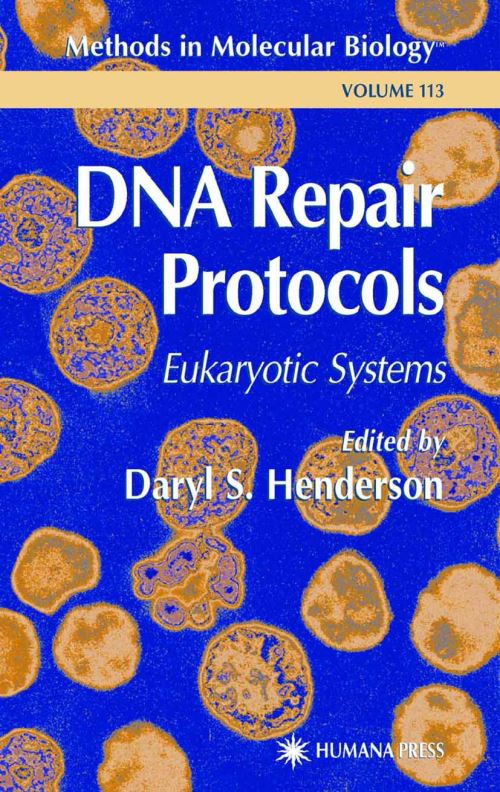
The field of eukaryotic DNA repair is enjoying a period of remarkable growth and discovery, fueled by technological advances in molecular bi- ogy, protein biochemistry, and genetics. Notable achievements include the molecular cloning of multiple genes associated with classical human repair disorders, such as xeroderma pigmentosum, Cockayne syndrome, and ataxia telangiectasia; elucidation of the core reaction of nucleotide excision repair (NER); the discovery that certain NER proteins participate not only in repair, but also in transcription; recognition of the crucial role played by mismatch repair processes in maintenance of genome stability and avoidance of cancer; the findings that the tumor suppressor protein p53 is mutated in many types of cancer, and has a key role in directing potentially malignant, genotoxin-d- aged cells towards an apoptotic fate; and the discovery and elaboration of DNA damage (and replication) checkpoints, which placed repair phenomen- ogy firmly within a cell-cycle context.
Of course, much remains to be learned about DNA repair. To that end, DNA Repair Protocols: Eukaryotic Systems is about the tools and techniques that have helped propel the DNA repair field into the mainstream of biological research. DNA Repair Protocols: Eukaryotic Systems provides detailed, step-- step instructions for studying manifold aspects of the eukaryotic response to genomic injury.
The majority of chapters describe methods for analyzing DNA repair processes in mammalian cells. However, many of those techniques can be applied with only minor modification to other systems, and vice versa.
| ISBN: | 9780896038028 |
| Publication date: | 21st June 1999 |
| Author: | Daryl S Henderson |
| Publisher: | Humana Press |
| Format: | Hardback |
| Pagination: | 641 pages |
| Series: | Methods in Molecular Biology |
| Genres: |
Biochemistry Cellular biology (cytology) |
The field of eukaryotic DNA repair is enjoying a period of remarkable growth and discovery, fueled by technological advances in molecular bi- ogy, protein biochemistry, and genetics. Notable achievements include the molecular cloning of multiple genes associated with classical human repair disorders, such as xeroderma pigmentosum, Cockayne syndrome, and ataxia telangiectasia; elucidation of the core reaction of nucleotide excision repair (NER); the discovery that certain NER proteins participate not only in repair, but also in transcription; recognition of the crucial role played by mismatch repair processes in maintenance of genome stability and avoidance of cancer; the findings that the tumor suppressor protein p53 is mutated in many types of cancer, and has a key role in directing potentially malignant, genotoxin-d- aged cells towards an apoptotic fate; and the discovery and elaboration of DNA damage (and replication) checkpoints, which placed repair phenomen- ogy firmly within a cell-cycle context.
DNA Repair Protocols features in the following genres: Biochemistry, Cellular biology (cytology)
Paperback, Hardback. Not Available.
DNA Repair Protocols was written by Daryl S Henderson and published by Humana Press
DNA Repair Protocols has 641 pages
Yes it is part of Methods in Molecular Biology series