

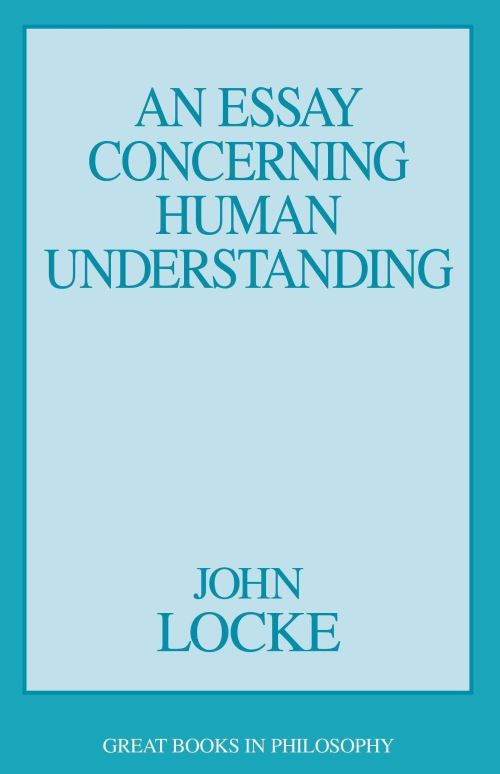
What is known? And how do we come to know it? These are the primary points of focus for metaphysics and epistemology, respectively.
Here, in one of the classic works of early-modern empiricist philosophy, John Locke (1632-1704) attempts to answer these basic human questions by moving away from the rationalist notion of innate ideas to establish the concept of the tabula rasa in which the mind is initially impressed with ideas through perception of the external world of substance. The formation of basic ideas through the perception of primary and secondary qualities, and the more sophisticated development of concepts, is discussed as Locke departs from a purely mental view of knowledge to ground what we know in the firmer soil of empirical observation and in the mind's ability to interrelate ideas from perception.
The careful reasoning of Locke's Essay has made it an enduring part of the history of of Western philosophy.
| ISBN: | 9780879759179 |
| Publication date: | 1st December 1995 |
| Author: | John Locke |
| Publisher: | Prometheus Books an imprint of Globe Pequot |
| Format: | Paperback |
| Pagination: | 624 pages |
| Series: | Great Books in Philosophy |
| Genres: |
Philosophy: logic Social and political philosophy Philosophy |
What is known? And how do we come to know it?
An Essay Concerning Human Understanding features in the following genres: Philosophy: logic, Social and political philosophy, Philosophy
Paperback. Not Available.
An Essay Concerning Human Understanding was written by John Locke and published by Prometheus Books an imprint of Globe Pequot
An Essay Concerning Human Understanding has 624 pages
Yes it is part of Great Books in Philosophy series