

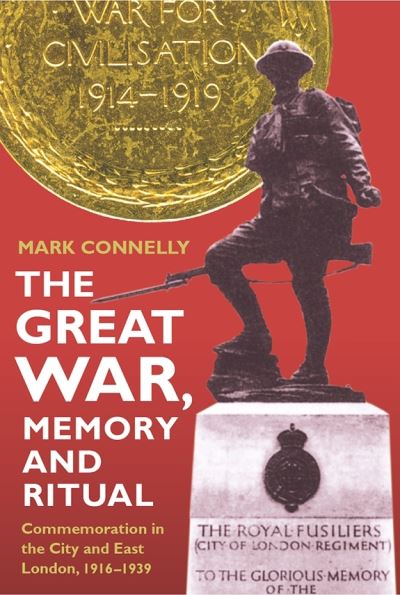
This detailed case study of a part of London shows how both the survivors and the bereaved sought to come to terms with the losses and implications of the Great War. The modern idea that the Great War was regarded as a futile waste of life by British society in the disillusioned 1920s and 1930s is here called into question by Mark Connelly. Through a detailed local study of a district containing a wide variety of religious, economic and social variations, he shows how both the survivors and the bereaved came to terms with the losses and implications of the Great War.
His study illustrates the ways in which communitiesas diverse as the Irish Catholics of Wapping, the Jews of Stepney and the Presbyterian ex-patriate Scots of Ilford, thanks to the actions of the local agents of authority and influence - clergymen, rabbis, councillors, teachers and employers - shaped the memory of their dead and created a very definite history of the war. Close focus on the planning of, fund-raising for, and erection of war memorials expands to a wider examination of how those memorials became a focus for a continuing need to remember, particularly each year on Armistice Day.
Mark Connelly is Professor of Modern British Military History, University of Kent.
| ISBN: | 9780861933273 |
| Publication date: | 19th February 2015 |
| Author: | Mark Connelly |
| Publisher: | Royal Historical Society an imprint of Boydell & Brewer Ltd |
| Format: | Paperback |
| Pagination: | 272 pages |
| Series: | Royal Historical Society Studies in History. New Series |
| Genres: |
European history |
This detailed case study of a part of London shows how both the survivors and the bereaved sought to come to terms with the losses and implications of the Great War. The modern idea that the Great War was regarded as a futile waste of life by British society in the disillusioned 1920s and 1930s is here called into question by Mark Connelly.
The Great War, Memory and Ritual features in the following genres: European history
Paperback. Not Available.
The Great War, Memory and Ritual was written by Mark Connelly and published by Royal Historical Society an imprint of Boydell & Brewer Ltd
The Great War, Memory and Ritual has 272 pages
Yes it is part of Royal Historical Society Studies in History. New Series series