
10% off all books and free delivery over £50
Buy from our bookstore and 25% of the cover price will be given to a school of your choice to buy more books. *15% of eBooks.

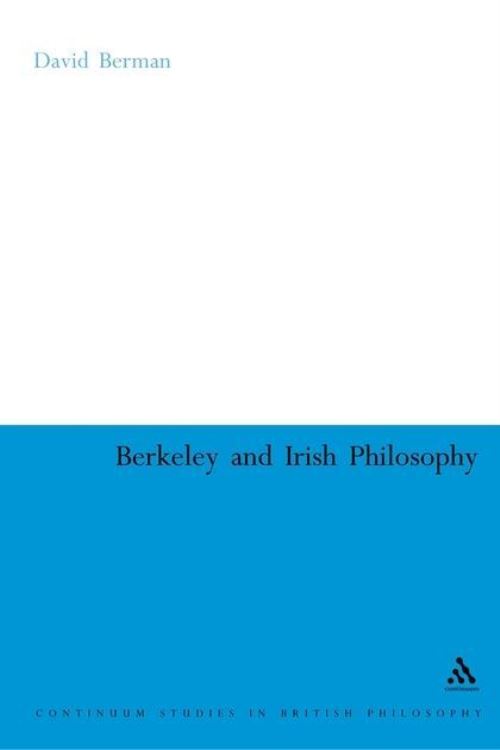
Berkeley and Irish Philosophy

View All Editions (1)

The selected edition of this book is not available to buy right now.
Add To Wishlist
Write A Review

About

Berkeley and Irish Philosophy Synopsis

The first essay in David Berman's new collection examines the full range of Berkeley's achievement, looking not only at his classic works of 1709-1713, but also Alciphron (1732) and his final book, the enigmaic Siris (1744). Item two examines a key problem in Berkeley's New Theory of Vision (1709): why does the moon look larger on the horizon than in the meridian? The third item criticizes the view, still uncritically accepted by many, that Berkeley's attacks on materialism are levelled against Locke.

Part 2 opens with Berman's two essays of 1982 - the first to show that Berkeley came from a rich and coherent Irish philosophical background. Next comes a discussion of the link between Berkeley and Francis Hutcheson, and particularly their answers to the Molyneux problem, which Berman takes to be the root problem of Irish philosophy.
The fourth essay looks at the impact of the golden age Irish philosophy on eighteenth-century American philosophy, where, again, Berkeley has a central position. The last item examines Berkeley's influence on Samuel Beckett.

Part 3 shows the many-sidedness of Berkeley's career, which is missed by those who concentrate exclusively on his work of 1709-1713. Each item here presents new material on Berkeley's life, or on his works and thought; most of these are new letters, not included in the Luce-Jessop edition of the Works of Berkeley. This section, therefore, can be seen a supplement to volumes 8 and 9 of the Works and also to Luce's Life of Berkeley.

About This Edition

ISBN: 9780826485908
Publication date:
Author: David Berman
Publisher: Bloomsbury Continuum an imprint of Bloomsbury Publishing
Format: Hardback
Pagination: 234 pages
Series: Continuum Studies in British Philosophy
Genres: Philosophy

Frequently asked questions