

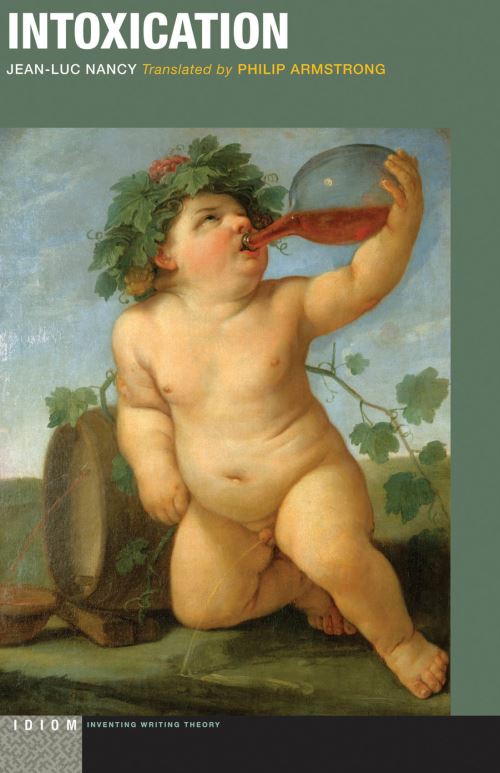
From Plato's Symposium to Hegel's truth as a "Bacchanalian revel," from the Bacchae of Euripedes to Nietzsche, philosophy holds a deeply ambivalent relation to the pleasures of intoxication. At the same time, from Baudelaire to Lowry, from Proust to Dostoyevsky, literature and poetry are also haunted by scenes of intoxication, as if philosophy and literature share a theme that announces and navigates their proximities and differences.
For Nancy, intoxication constitutes an excess that both fascinates and questions philosophy's sober ambitions for appropriate forms of philosophical behavior and conceptual lucidity. At the same time, intoxication displaces a number of established dualities-reason and passion, mind and body, rationality and desire, rigor and excess, clarity and confusion, logic and eros.
Taking its point of departure from Baudelaire's categorical imperative to understand modernity-"be drunk always"-Nancy's little book is composed in fragments, quotations, drunken asides, and inebriated repetitions. His contemporary "banquet" addresses a range of related themes, including the role of alcohol and intoxication in rituals, myths, divine sacrifice, and religious symbolism, all those toasts to the sacred "spirits" involving libations and different forms of speech and enunciation-to the gods, to modernity, to the Absolute. Affecting both mind and body, Nancy's subject becomes intoxicated: Ego sum, ego existo ebrius-I am, I exist-drunk.
| ISBN: | 9780823267729 |
| Publication date: | 1st December 2015 |
| Author: | JeanLuc Nancy |
| Publisher: | Fordham University Press |
| Format: | Hardback |
| Pagination: | 72 pages |
| Series: | Idiom Inventing Writing Theory |
| Genres: |
Literary theory Phenomenology and Existentialism Philosophy: aesthetics Philosophy of religion Western philosophy from c 1800 Literary studies: poetry and poets |
From Plato's Symposium to Hegel's truth as a "Bacchanalian revel," from the Bacchae of Euripedes to Nietzsche, philosophy holds a deeply ambivalent relation to the pleasures of intoxication. At the same time, from Baudelaire to Lowry, from Proust to Dostoyevsky, literature and poetry are also haunted by scenes of intoxication, as if philosophy and literature share a theme that announces and navigates their proximities and differences.
Intoxication features in the following genres: Literary theory, Phenomenology and Existentialism, Philosophy: aesthetics, Philosophy of religion, Western philosophy from c 1800, Literary studies: poetry and poets
Hardback, Paperback, Ebook. Not Available.
Intoxication was written by JeanLuc Nancy and published by Fordham University Press
Intoxication has 72 pages
Yes it is part of Idiom Inventing Writing Theory series