

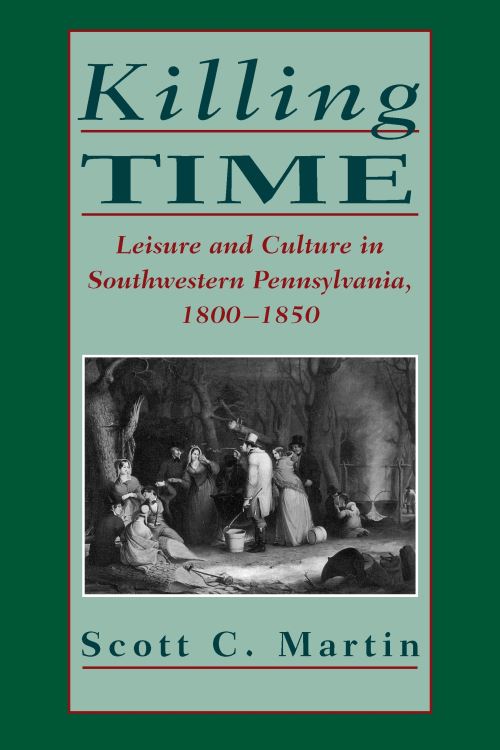
Scott C. Martin examines leisure as a "contested cultural space" in which nineteenth-century Americans articulated and developed ideas about ethnicity, class, gender, and community. This new perspective demonstrates how leisure and sociability mediated the transition from an agricultural to an industrial society. Martin argues persuasively that southwestern Pennsylvanians used leisure activities to create identities and define values in a society being transformed by market expansion. The transportation revolution brought new commercial entertainments and recreational opportunities but also fragmented and privatized customary patterns of communal leisure.
By using leisure as a window on the rapid changes sweeping through the region, Martin shows how southwestern Pennsylvanians used voluntary associations, private parties, and public gatherings to construct social identities better suited to their altered circumstances. The prosperous middle class devised amusements to distinguish them from workers who, in turn, resisted reformersÆ attempts to constrain their use of free time. Ethnic and racial minorities used holiday observances and traditional celebrations to define their place in American society, while women tested the boundaries of the domestic sphere through participation in church fairs, commercial recreation, and other leisure activities.
This study illuminates the cultural history of the region and offers broader insights into perceptions of free time, leisure, and community in antebellum America.
| ISBN: | 9780822961765 |
| Publication date: | 30th September 2011 |
| Author: | Martin |
| Publisher: | University of Pittsburgh Press |
| Format: | Paperback |
| Pagination: | 280 pages |
| Series: | Regional |
| Genres: |
History of the Americas Local history |
Scott C. Martin examines leisure as a "contested cultural space" in which nineteenth-century Americans articulated and developed ideas about ethnicity, class, gender, and community. This new perspective demonstrates how leisure and sociability mediated the transition from an agricultural to an industrial society. Martin argues persuasively that southwestern Pennsylvanians used leisure activities to create identities and define values in a society being transformed by market expansion. The transportation revolution brought new commercial entertainments and recreational opportunities but also fragmented and privatized customary patterns of communal leisure.
By using leisure as a window on the rapid changes sweeping through the region, Martin shows how southwestern Pennsylvanians used voluntary associations, private parties, and public gatherings to construct social identities better suited to their altered circumstances. The prosperous middle class devised amusements to distinguish them from workers who, in turn, resisted reformersÆ attempts to constrain their use of free time. Ethnic and racial minorities used holiday observances and traditional celebrations to define their place in American society, while women tested the boundaries of the domestic sphere through participation in church fairs, commercial recreation, and other leisure activities.
This study illuminates the cultural history of the region and offers broader insights into perceptions of free time, leisure, and community in antebellum America.
Killing Time features in the following genres: History
Killing Time is available in Paperback
Killing Time was written by Martin and published by University of Pittsburgh Press
Killing Time has 280 pages
Yes it is part of Regional series
£40.46