

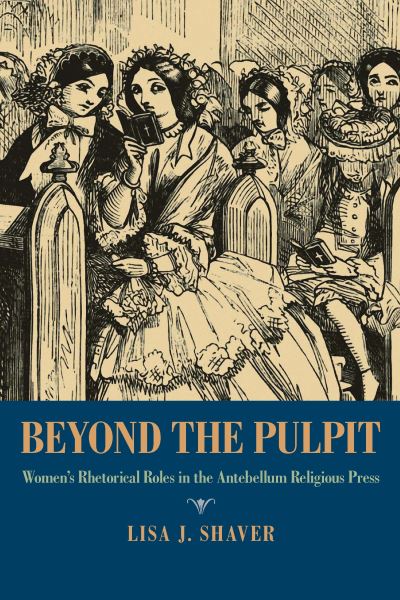
In the formative years of the Methodist Church in the United States, women played significant roles as proselytizers, organizers, lay ministers, and majority members. Although womenÆs participation helped the church to become the nationÆs largest denomination by the mid-nineteenth century, their official roles diminished during that time. In Beyond the Pulpit, Lisa Shaver examines Methodist periodicals as a rhetorical space to which women turned to find, and make, self-meaning.
In 1818, Methodist Magazine first published "memoirs" that eulogized women as powerful witnesses for their faith on their deathbeds. As Shaver observes, it was only in death that a woman could achieve the status of minister. Another Methodist publication, the Christian Advocate, was AmericaÆs largest circulated weekly by the mid-1830s. It featured the "LadiesÆ Department," a column that reinforced the canon of women as dutiful wives, mothers, and household managers. Here, the church also affirmed women in the important rhetorical and evangelical role of domestic preacher. Outside the "Ladies Department," women increasingly appeared in "little narratives" in which they were portrayed as models of piety and charity, benefactors, organizers, Sunday school administrators and teachers, missionaries, and ministersÆ assistants. These texts cast women into nondomestic roles that were institutionally sanctioned and widely disseminated.
By 1841, the LadiesÆ Repository and Gatherings of the West was engaging women in discussions of religion, politics, education, science, and a variety of intellectual debates. As Shaver posits, by providing a forum for women writers and readers, the church gave them an official rhetorical space and the license to define their own roles and spheres of influence. As such, the periodicals of the Methodist church became an important public venue in which womenÆs voices were heard and their identities explored.
| ISBN: | 9780822961697 |
| Publication date: | 4th January 2012 |
| Author: | Lisa J Shaver |
| Publisher: | University of Pittsburgh Press |
| Format: | Paperback |
| Pagination: | 169 pages |
| Series: | Pittsburgh Series in Composition, Literacy, and Culture |
| Genres: |
Language: reference and general Gender studies: women and girls Semantics, discourse analysis, stylistics |
In the formative years of the Methodist Church in the United States, women played significant roles as proselytizers, organizers, lay ministers, and majority members. Although womenÆs participation helped the church to become the nationÆs largest denomination by the mid-nineteenth century, their official roles diminished during that time.
Beyond the Pulpit features in the following genres: Language: reference and general, Gender studies: women and girls, Semantics, discourse analysis, stylistics
Paperback. Not Available.
Beyond the Pulpit was written by Lisa J Shaver and published by University of Pittsburgh Press
Beyond the Pulpit has 169 pages
Yes it is part of Pittsburgh Series in Composition, Literacy, and Culture series