

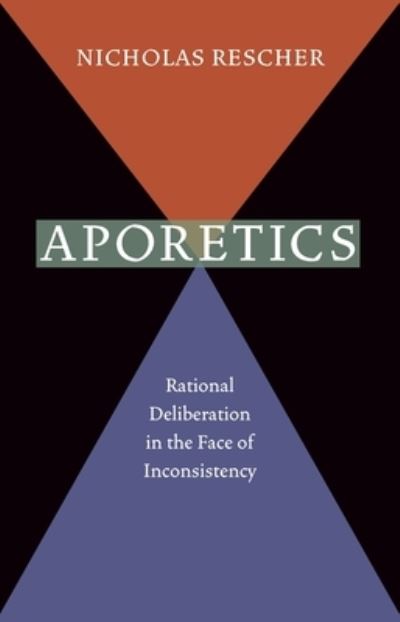
The word apory stems from the Greek aporia, meaning impasse or perplexing difficulty. In Aporetics, Nicholas Rescher defines an apory as a group of individually plausible but collectively incompatible theses. Rescher examines historic, formulaic, and systematic apories and couples these with aporetic theory from other authors to form this original and comprehensive survey. Citing thinkers from the pre-Socratics through Spinoza, Hegel, and Nicolai Hartmann, he builds a framework for coping with the complexities of divergent theses, and shows in detail how aporetic analysis can be applied to a variety of fields including philosophy, mathematics, linguistics, logic, and intellectual history.
Rescher's in-depth examination reveals how aporetic inconsistency can be managed through a plausibility analysis that breaks the chain of inconsistency at its weakest link by deploying right-of-way precedence based on considerations of cognitive centrality. Thus while involvement with cognitive conflicts and inconsistencies are pervasive in human thought, aporetic analysis can provide an effective means of damage control.
| ISBN: | 9780822960577 |
| Publication date: | 24th August 2009 |
| Author: | Nicholas Rescher |
| Publisher: | University of Pittsburgh Press |
| Format: | Paperback |
| Pagination: | 176 pages |
| Genres: |
Philosophy |
The word apory stems from the Greek aporia, meaning impasse or perplexing difficulty. In Aporetics, Nicholas Rescher defines an apory as a group of individually plausible but collectively incompatible theses.
Aporetics features in the following genres: Philosophy
Paperback. £36.86, down from the £40.95 cover price. Not Available.
Aporetics was written by Nicholas Rescher and published by University of Pittsburgh Press
Aporetics has 176 pages
£36.86, reduced from £40.95. Not Available.