

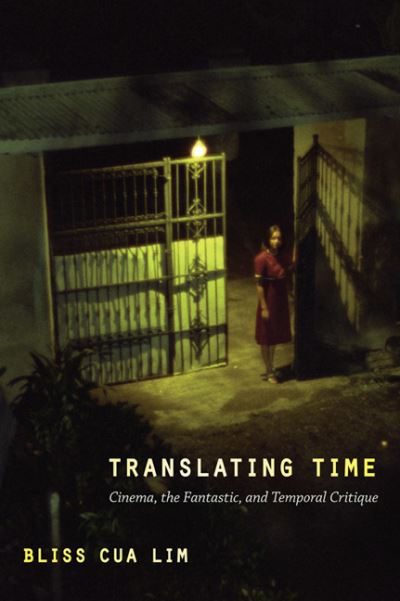
In Translating Time, Bliss Cua Lim argues that fantastic cinema depicts the coexistence of other modes of being alongside and within the modern present, disclosing multiple “immiscible temporalities” that strain against the modern concept of homogeneous time. In this wide-ranging study-encompassing Asian American video (On Cannibalism), ghost films from the New Cinema movements of Hong Kong and the Philippines (Rouge, Itim, Haplos), Hollywood remakes of Asian horror films (Ju-on, The Grudge, A Tale of Two Sisters) and a Filipino horror film cycle on monstrous viscera suckers (Aswang)-Lim conceptualizes the fantastic as a form of temporal translation. The fantastic translates supernatural agency in secular terms while also exposing an untranslatable remainder, thereby undermining the fantasy of a singular national time and emphasizing shifting temporalities of transnational reception.
Lim interweaves scholarship on visuality with postcolonial historiography. She draws on Henri Bergson's understanding of cinema as both implicated in homogeneous time and central to its critique, as well as on postcolonial thought linking the ideology of progress to imperialist expansion. At stake in this project are more ethical forms of understanding time that refuse to domesticate difference as anachronism.
While supernaturalism is often disparaged as a vestige of primitive or superstitious thought, Lim suggests an alternative interpretation of the fantastic as a mode of resistance to the ascendancy of homogeneous time and a starting-point for more ethical temporal imaginings.
| ISBN: | 9780822345107 |
| Publication date: | 21st September 2009 |
| Author: | Bliss Cua Lim |
| Publisher: | Duke University Press |
| Format: | Paperback |
| Pagination: | 352 pages |
| Series: | A John Hope Franklin Center Book |
| Genres: |
Film history, theory or criticism Asian history |
Under modernity, time is regarded as linear and measurable by clocks and calendars. Despite the historicity of clock-time itself, the modern concept of time is considered universal and culturally neutral.
Translating Time features in the following genres: Film history, theory or criticism, Asian history
Paperback, Hardback. £27.90, down from the £31.00 cover price. Not Available.
Translating Time was written by Bliss Cua Lim and published by Duke University Press
Translating Time has 352 pages
Yes it is part of A John Hope Franklin Center Book series
£27.90, reduced from £31.00. Not Available.