

Seigel explores the circulation of images of Brazilian coffee and of maxixe in the United States during the period just after the imperial expansions of the early twentieth century. Exoticist interpretations structured North Americans' paradoxical sense of themselves as productive “consumer citizens.” Some people, however, could not simply assume the privileges of citizenship.
In their struggles against racism, Afro-descended citizens living in Rio de Janeiro, S¦o Paulo, New York, and Chicago encountered images and notions of each other, and found them useful. Seigel introduces readers to cosmopolitan Afro-Brazilians and African Americans who rarely traveled far from home but who nonetheless absorbed ideas from abroad.
She suggests that studies comparing U.S. and Brazilian racial identities as two distinct constructions are misconceived. Racial formation transcends national borders; attempts to understand it must do the same.
| ISBN: | 9780822344407 |
| Publication date: | 18th March 2009 |
| Author: | Micol Seigel |
| Publisher: | Duke University Press |
| Format: | Paperback |
| Pagination: | 392 pages |
| Series: | American Encounters/global Interactions |
| Genres: |
History of the Americas Ethnic studies Social and cultural history |
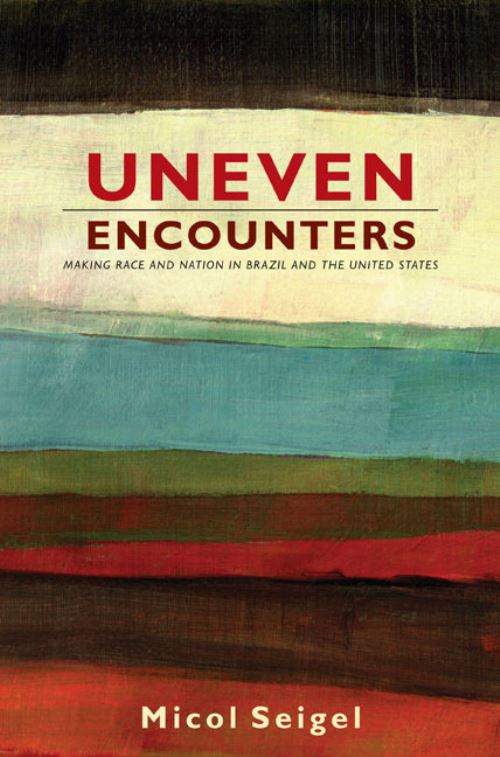
In Uneven Encounters, Micol Seigel chronicles the exchange of popular culture between Brazil and the United States in the years between the World Wars, and demonstrates how that exchange affected ideas of race and nation in both countries. From Americans interpreting advertisements for Brazilian coffee or dancing the Brazilian maxixe, to Rio musicians embracing the “foreign” qualities of jazz, Seigel traces a lively, cultural back and forth.
Uneven Encounters features in the following genres: History of the Americas, Ethnic studies, Social and cultural history
Hardback, Paperback. Not Available.
Uneven Encounters was written by Micol Seigel and published by Duke University Press
Uneven Encounters has 392 pages
Yes it is part of American Encounters/global Interactions series