

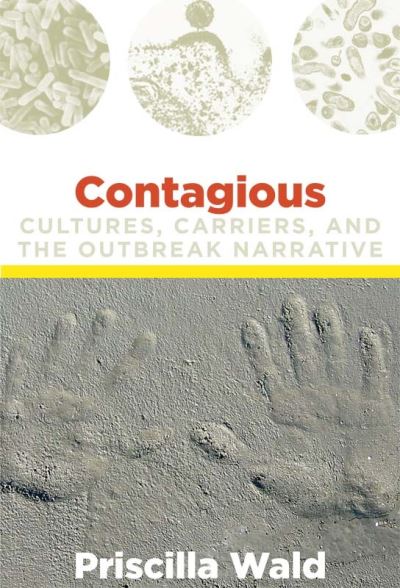
Wald traces how changing ideas about disease emergence and social interaction coalesced in the outbreak narrative. She returns to the early years of microbiology-to the identification of microbes and “Typhoid Mary,” the first known healthy human carrier of typhoid in the United States-to highlight the intertwined production of sociological theories of group formation (“social contagion”) and medical theories of bacteriological infection at the turn of the twentieth century.
Following the evolution of these ideas, Wald shows how they were affected by-or reflected in-the advent of virology, Cold War ideas about “alien” infiltration, science-fiction stories of brainwashing and body snatchers, and the HIV/AIDS pandemic. Contagious is a cautionary tale about how the stories we tell circumscribe our thinking about global health and human interactions as the world imagines-or refuses to imagine-the next Great Plague.
| ISBN: | 9780822341284 |
| Publication date: | 15th March 2008 |
| Author: | Priscilla Wald |
| Publisher: | Duke University Press |
| Format: | Hardback |
| Pagination: | 373 pages |
| Series: | A John Hope Franklin Center Book |
| Genres: |
Literary theory Health, illness and addiction: social aspects |
How should we understand the fear and fascination elicited by the accounts of communicable disease outbreaks that proliferated, following the emergence of HIV, in scientific publications and the mainstream media? The repetition of particular characters, images, and story lines-of Patients Zero and superspreaders, hot zones and tenacious microbes-produced a formulaic narrative as they circulated through the media and were amplified in popular fiction and film.
Contagious features in the following genres: Literary theory, Health, illness and addiction: social aspects
Hardback, Paperback. Not Available.
Contagious was written by Priscilla Wald and published by Duke University Press
Contagious has 373 pages
Yes it is part of A John Hope Franklin Center Book series