

Tracing the introduction and promotion of vital statistics and demography, Schweber identifies the institutional conditions that account for the contrasting styles of reasoning. She shows that the different reactions to statistics stemmed from different criteria for what counted as scientific knowledge.
The French wanted certain knowledge, a one-to-one correspondence between observations and numbers. The English adopted an instrumental approach, using the numbers to influence public opinion and evaluate and justify legislation.
Schweber recounts numerous attempts by vital statisticians and demographers to have their work recognized as legitimate scientific pursuits. While the British scientists had greater access to government policy makers, and were able to influence policy in a way that their French counterparts were not, ultimately neither the vital statisticians nor the demographers were able to institutionalize their endeavors.
By 1885, both fields had been superseded by new forms of knowledge. Disciplining Statistics highlights how the development of “scientific” knowledge was shaped by interrelated epistemological, political, and institutional considerations.
| ISBN: | 9780822338147 |
| Publication date: | 28th November 2006 |
| Author: | Libby Schweber |
| Publisher: | Duke University Press |
| Format: | Paperback |
| Pagination: | 296 pages |
| Series: | Politics, History and Culture |
| Genres: |
Population and demography |
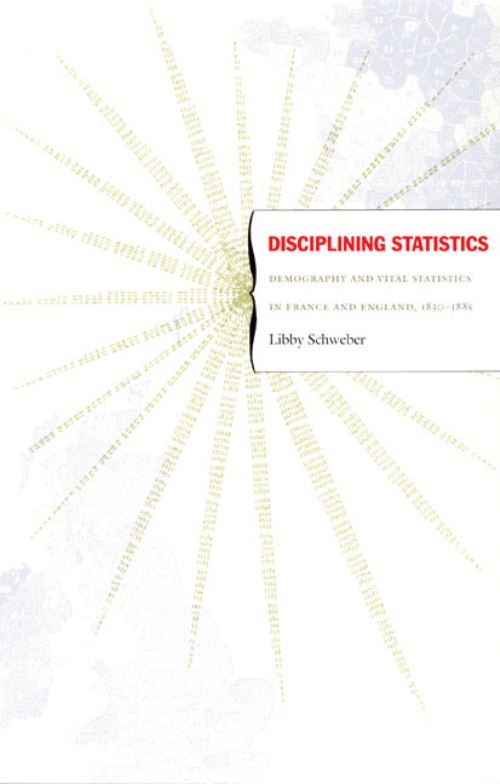
In Disciplining Statistics Libby Schweber compares the science of population statistics in England and France during the nineteenth century, demonstrating radical differences in the interpretation and use of statistical knowledge. Through a comparison of vital statistics and demography, Schweber describes how the English government embraced statistics, using probabilistic interpretations of statistical data to analyze issues related to poverty and public health.
Disciplining Statistics features in the following genres: Population and demography
Paperback, Hardback. Not Available.
Disciplining Statistics was written by Libby Schweber and published by Duke University Press
Disciplining Statistics has 296 pages
Yes it is part of Politics, History and Culture series