

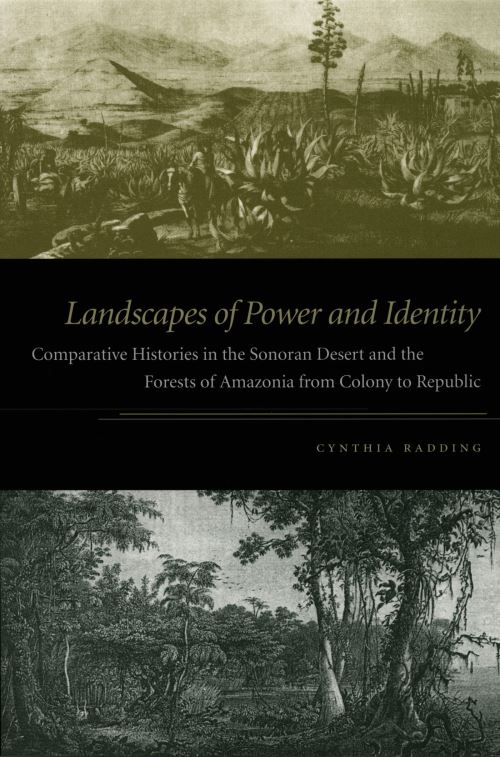
Radding's comparative approach illuminates what happened when similar institutions of imperial governance, commerce, and religion were planted in different physical and cultural environments. She draws on archival documents, published reports by missionaries and travelers, and previous histories as well as ecological studies and ethnographies.
She also considers cultural artifacts, including archaeological remains, architecture, liturgical music, and religious dances. Radding demonstrates how colonial encounters were conditioned by both the local landscape and cultural expectations; how the colonizers and colonized understood notions of territory and property; how religion formed the cultural practices and historical memories of the Sonoran and Chiquitano peoples; and how the conflict between the indigenous communities and the surrounding creole societies developed in new directions well into the nineteenth century.
| ISBN: | 9780822336891 |
| Publication date: | 18th January 2006 |
| Author: | Cynthia Radding |
| Publisher: | Duke University Press |
| Format: | Paperback |
| Pagination: | 416 pages |
| Genres: |
History of the Americas Geography Environmental science, engineering and technology |
Landscapes of Power and Identity is a groundbreaking comparative history of two colonies on the frontiers of the Spanish empire-the Sonora region of northwestern Mexico and the Chiquitos region of eastern Bolivia's lowlands-from the late colonial period through the middle of the nineteenth century. An innovative combination of environmental and cultural history, this book reflects Cynthia Radding's more than two decades of research on Mexico and Bolivia and her consideration of the relationships between human societies and the geographic landscapes they inhabit and create.
Landscapes of Power and Identity features in the following genres: History of the Americas, Geography, Environmental science, engineering and technology
Paperback. Not Available.
Landscapes of Power and Identity was written by Cynthia Radding and published by Duke University Press
Landscapes of Power and Identity has 416 pages