

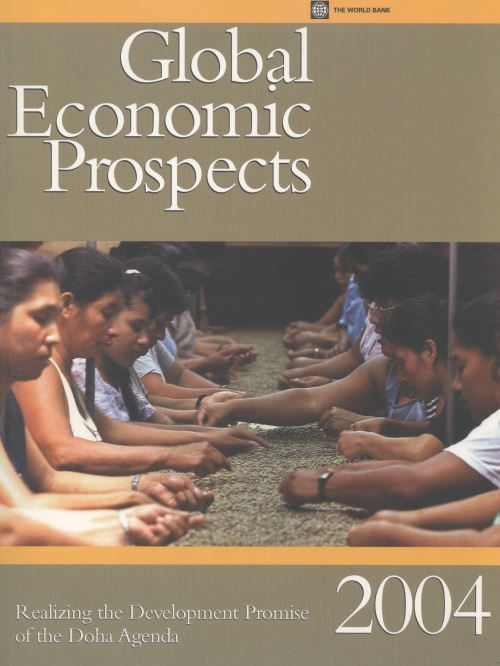
The Doha Development Agenda of the fourth Ministerial Conference of the WTO left open many contentious and important questions.;This study analyses the most critical multilateral trade issues through the lens of development and suggests policy options more inclusive of developing countries and more conducive to poverty reduction.;The 14th edition of this title: explores the short-, medium- and long-term outlook for the global economy, including driving forces, commodity prices and capital flows and their implications for major regions; review recent trends in exports from developing countries, structures of protection, their disadvantages to the poorest countries, and approaches to reduce protection; examines trade in agriculture - the most important and politically contentious sector for global poverty reduction - including key lessons from development experience, changes to the current system of subsidies and protection, and the potential for liberalization in both rich and middle-income countries; investigates the temporary movement of labour, with its advantages and disadvantages to both the home and host countries; discusses trade facilitation through a review of the empirical literature to inform development needs and recommendations on the WTO agenda; and reviews the participation of low-income countries in the WTO in three respects: the role of preferences and special and differential treatment, the complications of administering new WTO rules, and the decision-making itself within the WTO.
| ISBN: | 9780821355824 |
| Publication date: | 30th September 2003 |
| Author: | World Bank |
| Publisher: | World Bank Publications an imprint of World Bank Group Publications |
| Format: | Paperback |
| Genres: |
Development economics and emerging economies |
The Doha Development Agenda of the fourth Ministerial Conference of the WTO left open many contentious and important questions.;This study analyses the most critical multilateral trade issues through the lens of development and suggests policy options more inclusive of developing countries and more conducive to poverty reduction.;The 14th edition of this title: explores the short-, medium- and long-term outlook for the global economy, including driving forces, commodity prices and capital flows and their implications for major regions; review recent trends in exports from developing countries, structures of protection, their disadvantages to the poorest countries, and approaches to reduce protection; examines trade in agriculture - the most important and politically contentious sector for global poverty reduction - including key lessons from development experience, changes to the current system of subsidies and protection, and the potential for liberalization in both rich and middle-income countries; investigates the temporary movement of labour, with its advantages and disadvantages to both the home and host countries; discusses trade facilitation through a review of the empirical literature to inform development needs and recommendations on the WTO agenda; and reviews the participation of low-income countries in the WTO in three respects: the role of preferences and special and differential treatment, the complications of administering new WTO rules, and the decision-making itself within the WTO.
Global Economic Prospects 2004 features in the following genres: Development economics and emerging economies
Paperback. Not Available.
Global Economic Prospects 2004 was written by World Bank and published by World Bank Publications an imprint of World Bank Group Publications