

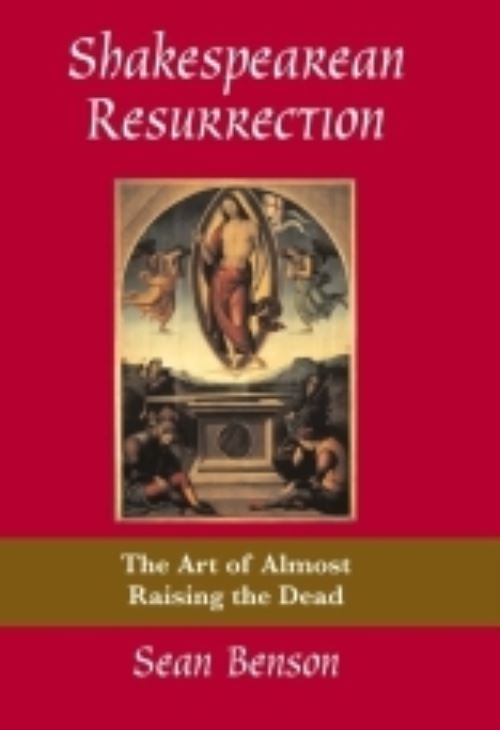
This engaging book demonstrates Shakespeare's abiding interest in the theatrical potential of the Christian resurrection from the dead. In fourteen of Shakespeare's plays, characters who have been lost, sometimes for years, suddenly reappear seemingly returning from the dead. In the classical recognition scene, such moments are explained away in naturalistic terms a character was lost at sea but survived, or abducted and escaped, and so on. Shakespeare never invalidates such explanations, but in his manipulation of classical conventions he parallels these moments with the recognition scenes from the Gospels, repeatedly evoking Christ's resurrection from the dead.
Benson's close study of the plays, as well as the classical and biblical sources that Shakespeare fuses into his recognition scenes, clearly elucidates the ways in which the playwright explored his abiding interest in the human desire to transcend death and to live reunited and reconciled with others. In his manipulation of resurrection imagery, Shakespeare conflates the material with the immaterial, the religious with the secular, and the sacred with the profane.
| ISBN: | 9780820704166 |
| Publication date: | 14th October 2009 |
| Author: | Sean Benson |
| Publisher: | Penn State University Press an imprint of Duquesne University Press |
| Format: | Hardback |
| Pagination: | 219 pages |
| Series: | Medieval & Renaissance Literary Studies |
| Genres: |
Literary studies: c 1400 to c 1600 |
This engaging book demonstrates Shakespeare's abiding interest in the theatrical potential of the Christian resurrection from the dead. In fourteen of Shakespeare's plays, characters who have been lost, sometimes for years, suddenly reappear seemingly returning from the dead.
Shakespearean Resurrection features in the following genres: Literary studies: c 1400 to c 1600
Hardback. Not Available.
Shakespearean Resurrection was written by Sean Benson and published by Penn State University Press an imprint of Duquesne University Press
Shakespearean Resurrection has 219 pages
Yes it is part of Medieval & Renaissance Literary Studies series