

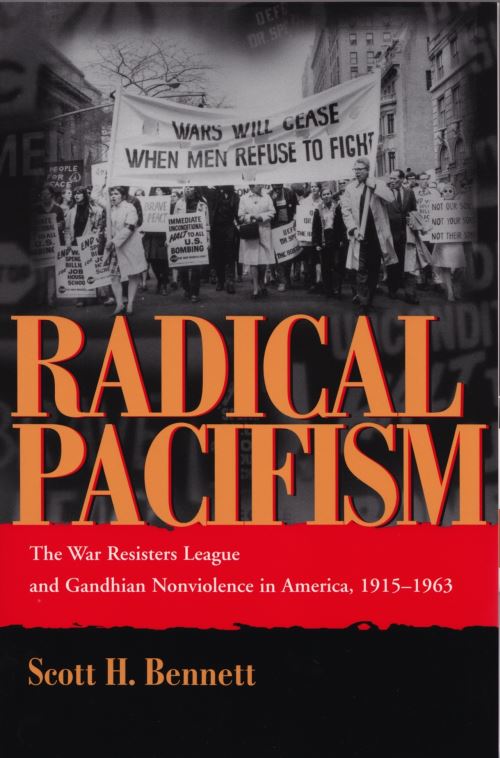
This deeply researched book is the first history of the War Resisters League, an organization that represents the major vehicle of secular radical pacifism in the United States. Besides opposing all U.S. wars and championing conscientious objection to these wars, Scott H. Bennett shows how the WRLled by its colorful membersfunctioned as a movement halfway house, assisting and influencing a variety of social reform groups and campaigns.
He devotes special attention to WWII conscientious objectors who staged dramatic wartime work and hunger strikes in Civilian Public Service camps and prison against Jim Crow, censorship, conscription, and other policies; these radical COs moved the postwar WRL in new directions and transformed radical pacifism. By recovering the important links between the WRL and the peace, civil rights, civil liberties, and anti-nuclear movements, he demonstrates the social relevance and political effectiveness of radical pacifism.
Bennett emphasizes the WRL's most important legacy: its promotion, legitimization, and Americanization of Gandhian nonviolent direct action, which infused the postwar peace and justice movements.
| ISBN: | 9780815630036 |
| Publication date: | 1st December 2003 |
| Author: | Scott H Bennett |
| Publisher: | Syracuse University Press |
| Format: | Hardback |
| Pagination: | 335 pages |
| Series: | Syracuse Studies on Peace and Conflict Resolution |
| Genres: |
Political science and theory Political ideologies and movements |
This deeply researched book is the first history of the War Resisters League, an organization that represents the major vehicle of secular radical pacifism in the United States. Besides opposing all U.S. wars and championing conscientious objection to these wars, Scott H.
Radical Pacifism features in the following genres: Political science and theory, Political ideologies and movements
Paperback, Hardback. Not Available.
Radical Pacifism was written by Scott H Bennett and published by Syracuse University Press
Radical Pacifism has 335 pages
Yes it is part of Syracuse Studies on Peace and Conflict Resolution series