

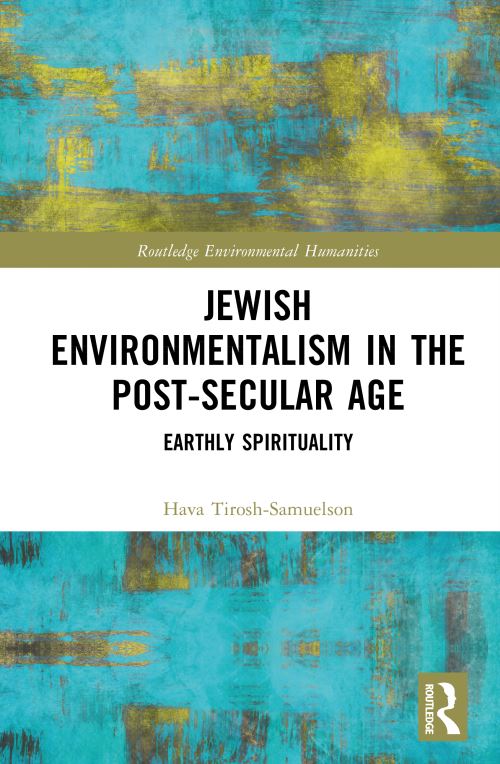
Presenting Jewish environmentalism as a case study of contemporary post-secularism, this book exemplifies the responses of world religions to the global ecological crisis and situates Jewish environmental spirituality historically, socially, theologically, and politically.
Discussing key figures, texts, and organizations that have given Jewish environmentalism its distinctive character as "earthly spirituality", the book explains how science and technology functioned in the secularization of Judaism, on the one hand, as well as in the counter process of sacralization of nature. It explores the various dimensions of Jewish environmentalism: official statements of Jewish denominations, eco-theologies, eco-hermeneutics, eco-feminism, and public theology; and also links Jewish environmentalism to main forces in modern Jewish history - Zionism, and Americanization. Finally, the study explores the contribution of "non-Jewish Jews" to American environmentalism and explains how "radical Jews" of Leftist orientation became Spiritual Progressives who promoted the ecological wisdom of Judaism to address the social ills of American society as well as the global ecological crisis.
This book will be of great interest to students and scholars of Jewish studies, religious studies, secularism/post-secularism studies, religion and ecology, and religion and science.
| ISBN: | 9780815357735 |
| Publication date: | 12th June 2026 |
| Author: | Hava TiroshSamuelson |
| Publisher: | Routledge an imprint of Taylor & Francis |
| Format: | Hardback |
| Pagination: | 300 pages |
| Series: | Routledge Environmental Humanities |
| Genres: |
Social groups: religious groups and communities Religious ethics Philosophy of religion Regional / International studies Judaism Environmentalist thought and ideology Social impact of environmental issues Sociology Anthropology Philosophical traditions and schools of thought |
Presenting Jewish environmentalism as a case study of contemporary post-secularism, this book exemplifies the responses of world religions to the global ecological crisis and situates Jewish environmental spirituality historically, socially, theologically, and politically.Discussing key figures, texts, and organizations that have given Jewish environmentalism its distinctive character as "earthly spirituality", the book explains how science and technology functioned in the secularization of Judaism, on the one hand, as well as in the counter process of sacralization of nature. It explores the various dimensions of Jewish environmentalism: official statements of Jewish denominations, eco-theologies, eco-hermeneutics, eco-feminism, and public theology; and also links Jewish environmentalism to main forces in modern Jewish history - Zionism, and Americanization.
Jewish Environmentalism in the Post-Secular Age features in the following genres: Social groups: religious groups and communities, Religious ethics, Philosophy of religion, Regional / International studies, Judaism, Environmentalist thought and ideology, Social impact of environmental issues, Sociology, Anthropology, Philosophical traditions and schools of thought
Hardback. £154.79, down from the £171.99 cover price. Not Available.
Jewish Environmentalism in the Post-Secular Age was written by Hava TiroshSamuelson and published by Routledge an imprint of Taylor & Francis
Jewish Environmentalism in the Post-Secular Age has 300 pages
Yes it is part of Routledge Environmental Humanities series
£154.79, reduced from £171.99. Not Available.