

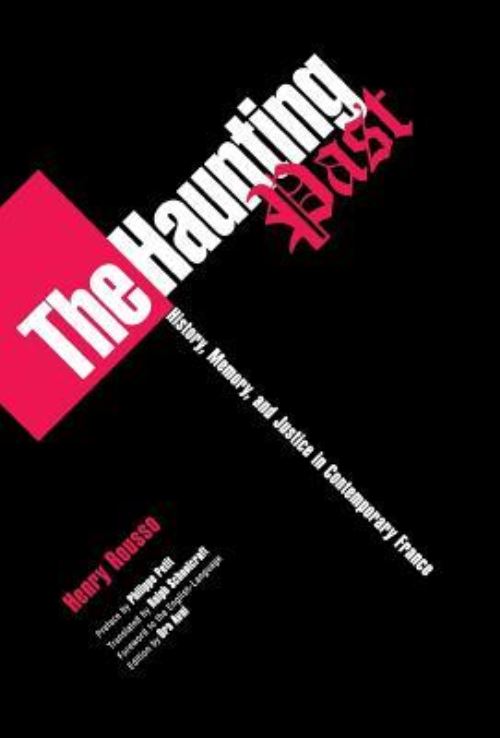
In The Haunting Past, French historian Henry Rousso discusses the varied and controversial treatments of French collaboration with the Nazis during the Vichy regime, focusing specifically on the roles played by historians, and history itself, in the postwar trials of accused collaborators.
While discussion of Nazi collaboration was mostly suppressed in the years immediately following World War II, recent changes in public sentiment paved the way for formal trials of former Vichy officials charged with collaborating with Nazi Germany. In a series of pointed interviews conducted by journalist Philippe Petit, Rousso considers events of the recent past-especially the emotionally charged Papon trial in France and the revelations that have come to light with the opening of Communist archives.
While Rousso was one of the historians called to testify at a number of sensational political trials, he was also one of the few who chose not to, arguing that history is constantly changing and being rewritten and therefore should not be taken into consideration as judicial evidence. Throughout the course of these trials, the public repeatedly claimed that historians had failed to account for the crimes of Vichy and that the time had come for the truth to be known and justice delivered. Rousso, on the other hand, argued against the combination of history and justice, claiming that justice is a matter of ethics or law, while history should be free from judgment.
The Haunting Past explores the methods historians employ to understand and frame varying perspectives on knowledge and truth, the ways an open society can or should manage information, and the moral and civic responsibilities of the intellectual elite in a democracy. In light of the sensational part often played by the modern media, this is a timely critique of institutions and of the relationship among politics, the courts, and the press. Rousso raises profound questions regarding the way true knowledge of the recent past is attained, untangling the roles of the historians, judges, and journalists empowered by society to bring forth historical truth and communicate it to the public.
| ISBN: | 9780812236453 |
| Publication date: | 4th February 2002 |
| Author: | Henry Rousso |
| Publisher: | University of Pennsylvania Press |
| Format: | Hardback |
| Pagination: | 96 pages |
| Series: | Critical Authors & Issues |
| Genres: |
Jurisprudence and general issues General and world history |
In The Haunting Past, French historian Henry Rousso discusses the varied and controversial treatments of French collaboration with the Nazis during the Vichy regime, focusing specifically on the roles played by historians, and history itself, in the postwar trials of accused collaborators. While discussion of Nazi collaboration was mostly suppressed in the years immediately following World War II, recent changes in public sentiment paved the way for formal trials of former Vichy officials charged with collaborating with Nazi Germany.
The Haunting Past features in the following genres: Jurisprudence and general issues, General and world history
Hardback. Not Available.
The Haunting Past was written by Henry Rousso and published by University of Pennsylvania Press
The Haunting Past has 96 pages
Yes it is part of Critical Authors & Issues series