

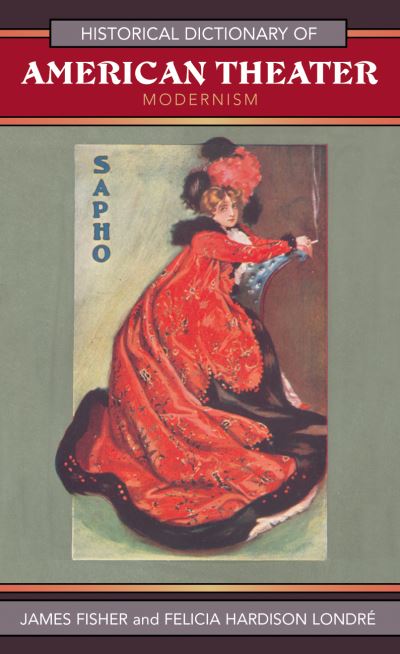
The fifty-year period from 1880 to 1929 is the richest era for theater in American history, certainly in the great number of plays produced and artists who contributed significantly, but also in the centrality of theater in the lives of Americans. As the impact of European modernism began to gradually seep into American theater during the 1880s and quite importantly in the 1890s, more traditional forms of theater gave way to futurism, symbolism, surrealism, and expressionism. American playwrights like Eugene O'Neill, George Kelly, Elmer Rice, Philip Barry, and George S. Kaufman ushered in the Golden Age of American drama. The Historical Dictionary of American Theater: Modernism focuses on legitimate drama, both as influenced by European modernism and as impacted by the popular entertainment that also enlivened the era. This is accomplished through a chronology, an introductory essay, a bibliography, and hundreds of cross-referenced entries on plays; music; playwrights; great performers like Maude Adams, Otis Skinner, Julia Marlowe, and E.H. Sothern; producers like David Belasco, Daniel Frohman, and Florenz Ziegfield; critics; architects; designers; and costumes.
| ISBN: | 9780810855335 |
| Publication date: | 19th November 2007 |
| Author: | James Fisher, Felicia Hardison Londré |
| Publisher: | The Scarecrow Press an imprint of Scarecrow Press |
| Format: | Hardback |
| Pagination: | 570 pages |
| Series: | Historical Dictionaries of Literature and the Arts |
| Genres: |
Theatre studies |
The fifty-year period from 1880 to 1929 is the richest era for theater in American history, certainly in the great number of plays produced and artists who contributed significantly, but also in the centrality of theater in the lives of Americans. As the impact of European modernism began to gradually seep into American theater during the 1880s and quite importantly in the 1890s, more traditional forms of theater gave way to futurism, symbolism, surrealism, and expressionism. American playwrights like Eugene O'Neill, George Kelly, Elmer Rice, Philip Barry, and George S. Kaufman ushered in the Golden Age of American drama. The Historical Dictionary of American Theater: Modernism focuses on legitimate drama, both as influenced by European modernism and as impacted by the popular entertainment that also enlivened the era. This is accomplished through a chronology, an introductory essay, a bibliography, and hundreds of cross-referenced entries on plays; music; playwrights; great performers like Maude Adams, Otis Skinner, Julia Marlowe, and E.H. Sothern; producers like David Belasco, Daniel Frohman, and Florenz Ziegfield; critics; architects; designers; and costumes.
Historical Dictionary of American Theater features in the following genres: Theatre studies
Historical Dictionary of American Theater is available in Hardback
Historical Dictionary of American Theater was written by James Fisher, Felicia Hardison Londré and published by The Scarecrow Press an imprint of Scarecrow Press
Historical Dictionary of American Theater has 570 pages
Yes it is part of Historical Dictionaries of Literature and the Arts series