

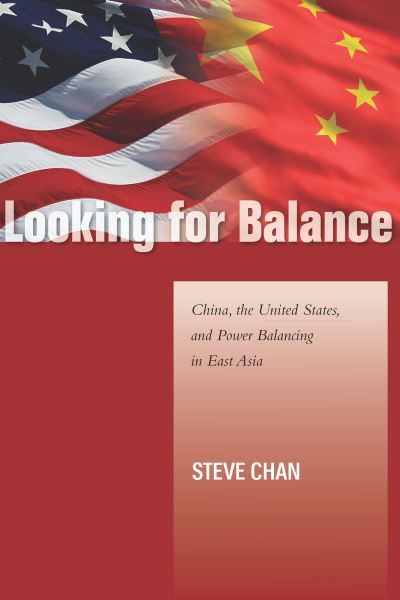
Debate surrounding "China's rise," and the prospects of its possible challenge to America's preeminence, has focused on two questions: whether the United States should "contain" or "engage" China; and whether the rise of Chinese power has inclined other East Asian states to "balance" against Beijing by alignment with the United States or ramping up their military expenditures.
By drawing on alternative theoretic approaches-most especially "balance-of-threat" theory, political economic theory, and theories of regime survival and economic interdependence, Steve Chan is able to create an explanation of regional developments that differs widely from the traditional "strategic vision" of national interest.
He concludes that China's primary aim is not to match U.S. military might or the foreign policy influence that flows from that power, and that its neighbors are not balancing against its rising power because, in today's guns-versus-butter fiscal reality, balancing policies would entail forfeiting possible gains that can accrue from cooperation, economic growth, and the application of GDP to nonmilitary ends. Instead, most East Asian countries have collectively pivoted to a strategy of elite legitimacy and regime survival based on economic performance.
| ISBN: | 9780804778206 |
| Publication date: | 8th February 2012 |
| Author: | Steve Chan |
| Publisher: | Stanford University Press |
| Format: | Hardback |
| Pagination: | 282 pages |
| Series: | Studies in Asian Security |
| Genres: |
Warfare and defence |
He concludes that China's primary aim is not to match U.S. military might or the foreign policy influence that flows from that power, and that its neighbors are not balancing against its rising power because, in today's guns-versus-butter fiscal reality, balancing policies would entail forfeiting possible gains that can accrue from cooperation, economic growth, and the application of GDP to nonmilitary ends. Instead, most East Asian countries have collectively pivoted to a strategy of elite legitimacy and regime survival based on economic performance.
Looking for Balance features in the following genres: Warfare and defence
Paperback, Ebook, Hardback. Not Available.
Looking for Balance was written by Steve Chan and published by Stanford University Press
Looking for Balance has 282 pages
Yes it is part of Studies in Asian Security series