

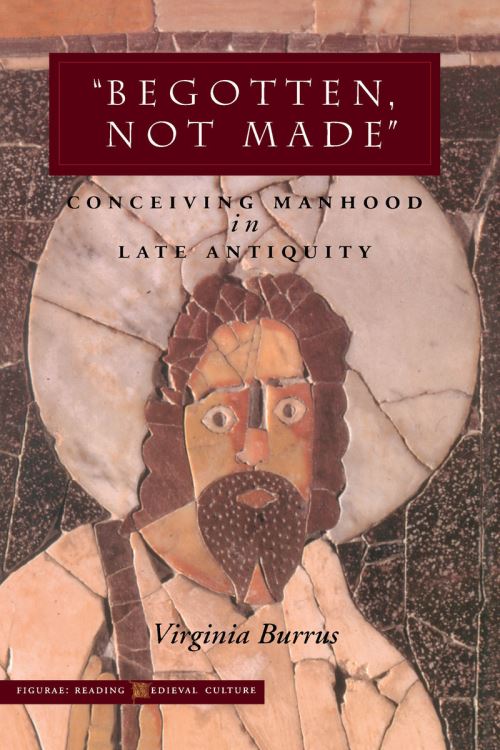
This book interprets fourth-century theological discourse as an incident in the history of masculine gender, arguing that Nicene trinitarian doctrine is a crucial site not only for theological innovation but also for reimagining and reproducing manhood in the late Roman period. When the Trinity became for the first time the sine qua non of doctrinal orthodoxy, masculinity was conceived anew, in terms that heightened the claims of patriarchal authority while cutting manhood loose from its traditional fleshly and familial moorings.
In exploring the significance of this late antique movement for the subsequent history of ideals of manhood in the West, this study directly engages, combines, and thereby disrupts the divergent disciplinary perspectives of historical theology, late Roman cultural history, and French feminist theory. The author brings contemporary theorist Luce Irigaray into dialogue with the Patristic corpus to coax out a fresh interpretation of ancient texts and themes.
The book centers on performative readings of major works by three prominent fourth-century Fathers-Athanasius of Alexandria, Gregory of Nyssa, and Ambrose of Milan. Each of these ascetic bishops played a crucial role in defending Nicene trinitarian doctrine as the touchstone of orthodox belief; each also modeled a distinctive style of fourth-century masculine self-fashioning. The concluding chapter considers the sum of these three figures from an explicitly feminist theological and theoretical perspective.
| ISBN: | 9780804739733 |
| Publication date: | 1st July 2000 |
| Author: | Virginia Burrus |
| Publisher: | Stanford University Press |
| Format: | Paperback |
| Pagination: | 271 pages |
| Series: | Figurae. |
| Genres: |
Christianity Theology |
This book interprets fourth-century theological discourse as an incident in the history of masculine gender, arguing that Nicene trinitarian doctrine is a crucial site not only for theological innovation but also for reimagining and reproducing manhood in the late Roman period. When the Trinity became for the first time the sine qua non of doctrinal orthodoxy, masculinity was conceived anew, in terms that heightened the claims of patriarchal authority while cutting manhood loose from its traditional fleshly and familial moorings.
Begotten, Not Made features in the following genres: Christianity, Theology
Hardback, Paperback. Not Available.
Begotten, Not Made was written by Virginia Burrus and published by Stanford University Press
Begotten, Not Made has 271 pages
Yes it is part of Figurae. series