

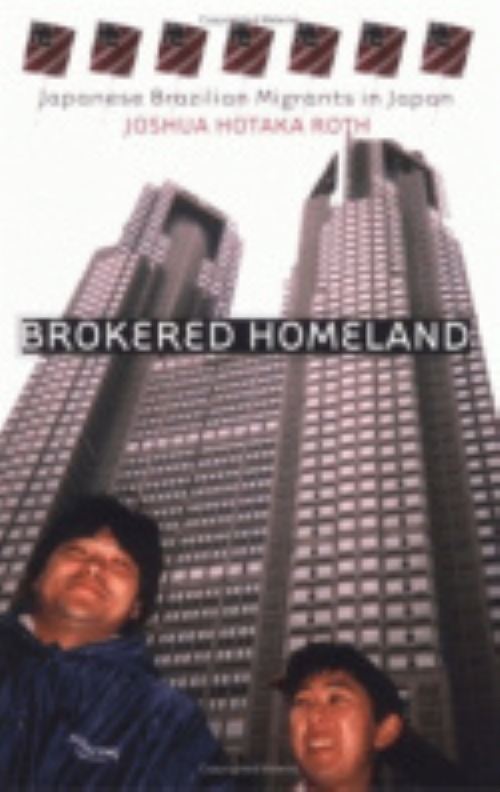
Faced with an aging workforce, Japanese firms are hiring foreign workers in ever-increasing numbers. In 1990 Japan's government began encouraging the migration of Nikkeijin (overseas Japanese) who are presumed to assimilate more easily than are foreign nationals without a Japanese connection. More than 250,000 Nikkeijin, mainly from Brazil, now work in Japan.
The interactions between Nikkeijin and natives, says Joshua Hotaka Roth, play a significant role in the emergence of an increasingly multicultural Japan. He uses the experiences of Japanese Brazilians in Japan to illuminate the racial, cultural, linguistic, and other criteria groups use to distinguish themselves from one another. Roth's analysis is enriched by on-site observations at festivals, in factories, and in community centers, as well as by interviews with workers, managers, employment brokers, and government officials.
Considered both "essentially Japanese" and "foreign," nikkeijin benefit from preferential immigration policy, yet face economic and political strictures that marginalize them socially and deny them membership in local communities. Although the literature on immigration tends to blame native blue-collar workers for tense relations with migrants, Roth makes a compelling case for a more complex definition of the relationships among class, nativism, and foreign labor. Brokered Homeland is enlivened by Roth's own experience: in Japan, he came to think of himself as nikkeijin, rather than as Japanese-American.
| ISBN: | 9780801488085 |
| Publication date: | 16th July 2002 |
| Author: | Joshua Hotaka Roth |
| Publisher: | Cornell University Press |
| Format: | Paperback |
| Pagination: | 176 pages |
| Series: | The Anthropology of Contemporary Issues |
| Genres: |
History of the Americas Migration, immigration and emigration Social and cultural anthropology Asian history |
Faced with an aging workforce, Japanese firms are hiring foreign workers in ever-increasing numbers. In 1990 Japan's government began encouraging the migration of Nikkeijin (overseas Japanese) who are presumed to assimilate more easily than are foreign nationals without a Japanese connection.
Brokered Homeland features in the following genres: History of the Americas, Migration, immigration and emigration, Social and cultural anthropology, Asian history
Hardback, Paperback. £25.19, down from the £27.99 cover price. In Stock.
Brokered Homeland was written by Joshua Hotaka Roth and published by Cornell University Press
Brokered Homeland has 176 pages
Yes it is part of The Anthropology of Contemporary Issues series
£25.19, reduced from £27.99. In Stock.