

"That science-fiction future in which technology would make everything very good-or very bad-has not yet arrived. From our vantage point at least, no age appears to have had a deeper faith in the inevitability and imminence of such a total technological transformation than the early twentieth century. Russia was no exception."-from the introduction
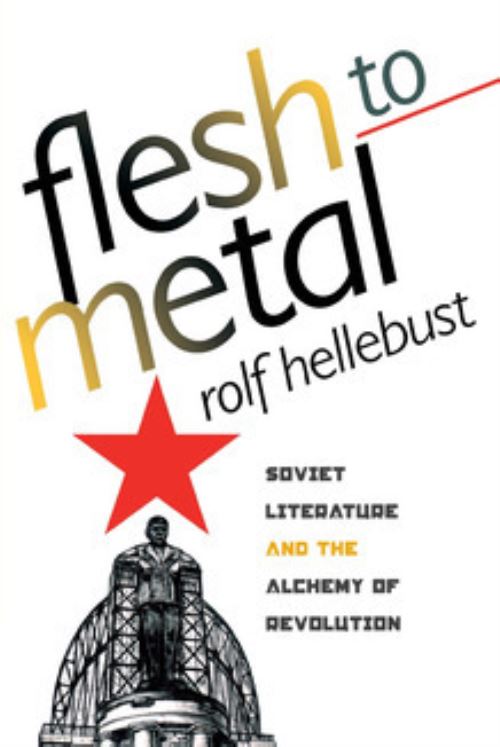
In the Soviet Union, it seems, armoring oneself against the world did not suffice-it was best to become metal itself. In his engaging and accessible book, Rolf Hellebust explores the aesthetic and ideological function of the metallization of the revolutionary body as revealed in Soviet literature, art, and politics. His book shows how the significance of this modern myth goes far beyond the immediate issue of the enthusiasm with which the Bolsheviks welcomed such a symbolic transfiguration and that of our own uneasy attraction to the images of metal flesh and machine-men.
Hellebust's literary examples range from the famous (Pasternak's Doctor Zhivago) to the forgotten (early Soviet proletarian poets). To these he adds a mix of non-Russian references, from creation myths to comic book superheroes, medieval alchemy to Moby-Dick. He includes readings of posters, sculpture, and political discourse as well as cross-cultural comparisons to revolutionary France, industrial-age America, and Nazi Germany.
The result is a fascinating portrait of the ultimate symbols of dehumanizing modernity, as refracted through the prism of utopian humanism.
| ISBN: | 9780801441530 |
| Publication date: | 30th September 2003 |
| Author: | Rolf Hellebust |
| Publisher: | Cornell University Press |
| Format: | Hardback |
| Pagination: | 221 pages |
| Genres: |
Literary studies: c 1900 to c 2000 Literature: history and criticism Film history, theory or criticism Literary studies: fiction, novelists and prose writers Political ideologies and movements |
"That science-fiction future in which technology would make everything very good-or very bad-has not yet arrived. From our vantage point at least, no age appears to have had a deeper faith in the inevitability and imminence of such a total technological transformation than the early twentieth century.
Flesh to Metal features in the following genres: Literary studies: c 1900 to c 2000, Literature: history and criticism, Film history, theory or criticism, Literary studies: fiction, novelists and prose writers, Political ideologies and movements
Ebook, Paperback, Hardback. Not Available.
Flesh to Metal was written by Rolf Hellebust and published by Cornell University Press
Flesh to Metal has 221 pages