

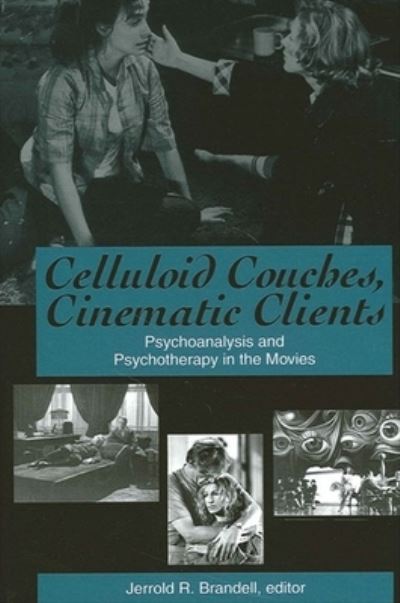
Looks at how therapy and the "talking cure" have been portrayed in the movies.
Consisting of contributions from psychoanalysts and therapists, as well as authors in such fields as literature and cinema studies, Celluloid Couches, Cinematic Clients explores how therapy and therapists have been portrayed in the movies over the last seventy-five years. From the 1926 silent film Secrets of a Soul, to Hitchcock's 1946 classic Spellbound, to the recent Girl, Interrupted, the contributors look at how moviemakers view therapy and the "talking cure" and examine important themes and controversies in the process.
Very often, cinematic efforts to portray the treatment process in psychoanalysis or psychotherapy are idiosyncratic, misleading, distorted, or even pathological. Yet this collection is not nearly as interested in denouncing such portrayals as in examining those films that offer us the opportunity to explore themes and issues from a vantage point outside our usual reference frame. Rather than focusing on what screenwriters and directors got wrong, each contributor asks instead what might be learned from the movies about professional selves and the nature of the therapeutic endeavor.
| ISBN: | 9780791460825 |
| Publication date: | 29th April 2004 |
| Author: | Jerrold R Brandell |
| Publisher: | SUNY Press an imprint of State University of New York Press |
| Format: | Paperback |
| Pagination: | 250 pages |
| Series: | SUNY Series in Psychoanalysis and Culture |
| Genres: |
Popular culture Psychoanalytical and Freudian psychology Film history, theory or criticism |
Looks at how therapy and the "talking cure" have been portrayed in the movies.Consisting of contributions from psychoanalysts and therapists, as well as authors in such fields as literature and cinema studies, Celluloid Couches, Cinematic Clients explores how therapy and therapists have been portrayed in the movies over the last seventy-five years. From the 1926 silent film Secrets of a Soul, to Hitchcock's 1946 classic Spellbound, to the recent Girl, Interrupted, the contributors look at how moviemakers view therapy and the "talking cure" and examine important themes and controversies in the process.Very often, cinematic efforts to portray the treatment process in psychoanalysis or psychotherapy are idiosyncratic, misleading, distorted, or even pathological.
Celluloid Couches, Cinematic Clients features in the following genres: Popular culture, Psychoanalytical and Freudian psychology, Film history, theory or criticism
Paperback, Hardback. Not Available.
Celluloid Couches, Cinematic Clients was written by Jerrold R Brandell and published by SUNY Press an imprint of State University of New York Press
Celluloid Couches, Cinematic Clients has 250 pages
Yes it is part of SUNY Series in Psychoanalysis and Culture series