

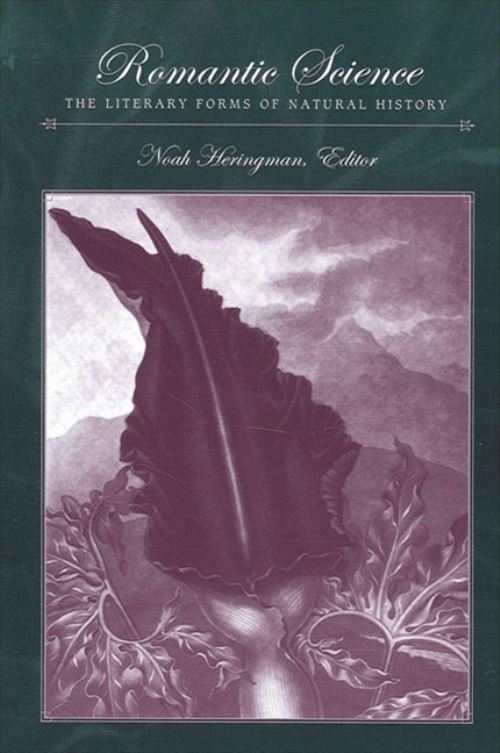
Uncovers the vital role that new scientific discoveries played in Romantic literary culture.
Although "romantic science" may sound like a paradox, much of the romance surrounding modern science-the mad scientist, the intuitive genius, the utopian transformation of nature-originated in the Romantic period. Romantic Science traces the literary and cultural politics surrounding the formation of the modern scientific disciplines emerging from eighteenth-century natural history.
Revealing how scientific concerns were literary concerns in the Romantic period, the contributors uncover the vital role that new discoveries in earth, plant, and animal sciences played in the period's literary culture. As Thomas Pennant put it in 1772, "Natural History is, at present, the favourite science over all Europe, and the progress which has been made in it will distinguish and characterise the eighteenth century in the annals of literature." As they examine the social and literary ramifications of a particular branch or object of natural history, the contributors to this volume historicize our present intellectual landscape by reimagining and redrawing the disciplinary boundaries between literature and science.
Contributors include Alan Bewell, Rachel Crawford, Noah Heringman, Theresa M. Kelley, Amy Mae King, Lydia H. Liu, Anne K. Mellor, Stuart Peterfreund, and Catherine E. Ross.
| ISBN: | 9780791457016 |
| Publication date: | 2nd July 2003 |
| Author: | Noah Heringman |
| Publisher: | SUNY Press an imprint of State University of New York Press |
| Format: | Hardback |
| Pagination: | 296 pages |
| Series: | SUNY Series, Studies in the Long Nineteenth Century |
| Genres: |
History of science European history Literature: history and criticism |
Uncovers the vital role that new scientific discoveries played in Romantic literary culture.Although "romantic science" may sound like a paradox, much of the romance surrounding modern science-the mad scientist, the intuitive genius, the utopian transformation of nature-originated in the Romantic period. Romantic Science traces the literary and cultural politics surrounding the formation of the modern scientific disciplines emerging from eighteenth-century natural history.
Romantic Science features in the following genres: History of science, European history, Literature: history and criticism
Paperback, Hardback. Not Available.
Romantic Science was written by Noah Heringman and published by SUNY Press an imprint of State University of New York Press
Romantic Science has 296 pages
Yes it is part of SUNY Series, Studies in the Long Nineteenth Century series