

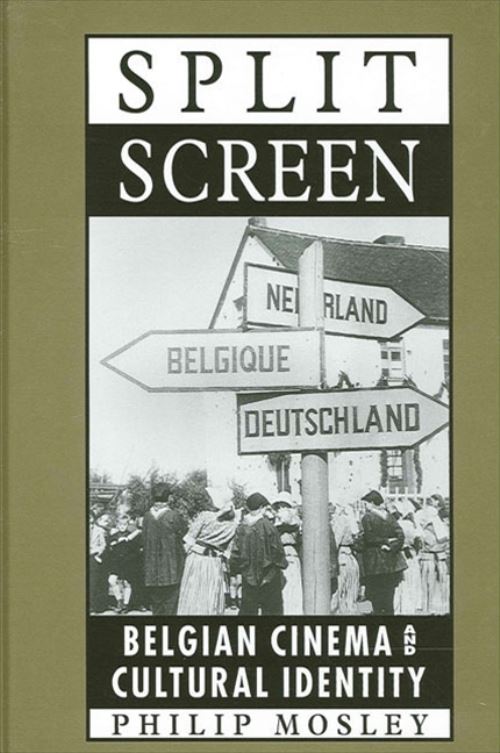
Explores the historical evolution of Belgian cinema as well as its contemporary situation within the evolving contexts of global media and European unity.
In presenting the first English language study of Belgian cinema, Split Screen explores the fascinating history of a cinema largely determined by linguistic division and beset by problems of cultural identity. This "split screen" characterizes the Belgian cinema, which has not received the critical praise that it deserves, despite the recent international successes of films like Toto the Hero, and the achievements of individual directors such as Henri Storck, André Delvaux, and Chantal Akerman.
In surveying the evolution of Belgian cinema from its beginnings to the present day, Philip Mosley locates all the major feature films, describes the crucial intervention of the state in film production, and reveals undervalued Belgian traditions in documentary, in animation, in short films, and in a colonial cinema created partly by missionaries in the former Belgian Congo.
Due to the political and economic transformations affecting Europe, the reforms of the Belgian state, and the increasing globalization of world media industries, Belgian cinema can now inscribe itself within new national and international contexts.
| ISBN: | 9780791447475 |
| Publication date: | 2nd November 2000 |
| Author: | Philip Mosley |
| Publisher: | SUNY Press an imprint of State University of New York Press |
| Format: | Hardback |
| Pagination: | 251 pages |
| Series: | SUNY Series, Cultural Studies in Cinema/video |
| Genres: |
Popular culture Film history, theory or criticism |
Explores the historical evolution of Belgian cinema as well as its contemporary situation within the evolving contexts of global media and European unity.In presenting the first English language study of Belgian cinema, Split Screen explores the fascinating history of a cinema largely determined by linguistic division and beset by problems of cultural identity. This "split screen" characterizes the Belgian cinema, which has not received the critical praise that it deserves, despite the recent international successes of films like Toto the Hero, and the achievements of individual directors such as Henri Storck, André Delvaux, and Chantal Akerman.
Split Screen features in the following genres: Popular culture, Film history, theory or criticism
Hardback, Paperback. Not Available.
Split Screen was written by Philip Mosley and published by SUNY Press an imprint of State University of New York Press
Split Screen has 251 pages
Yes it is part of SUNY Series, Cultural Studies in Cinema/video series