

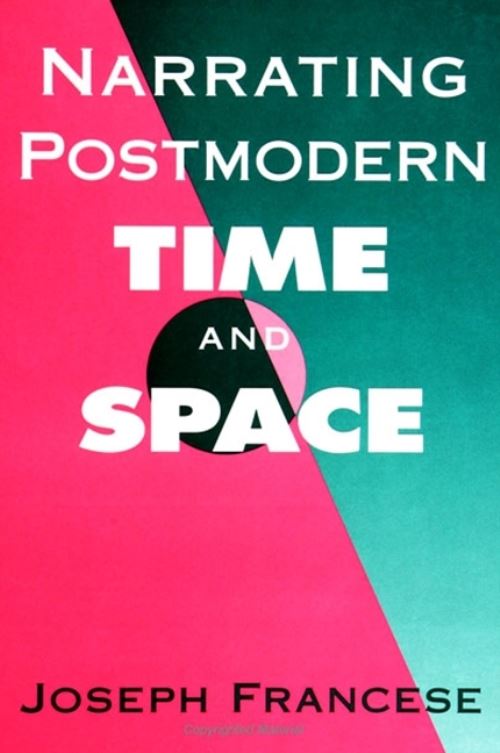
Defines postmodern writing and distinguishes it from modern writing by citing examples from two modern and three postmodern writers: Italo Calvino, John Barth, Toni Morrison, E. L. Doctorow, and Antonio Tabucchi.
Francese defines postmodern writing and distinguishes it from modernist prose by citing the examples of two modern and three postmodern authors: Italo Calvino, John Barth, Toni Morrison, E. L. Doctorow, and Antonio Tabucchi. While the modernist narratives of Calvino and Barth attempt to assimilate what is other, the postmodern narratives of Morrison, Doctorow, and Tabucchi recognize diversities that cannot be assimilated, instead seeking out external, communicative sources of authentication.
To a great extent, these changes in narrative strategy are a response to changes in real living conditions, namely, our modified perception of space and the radical shortening of time horizons caused by recent revolutionary advances in information technology. Although Morrison, Doctorow, and Tabucchi vary in their stylistic responses to these changes, their narratives propose a collective recovery of the past into a future-oriented present and serve as examples of how literature can intervene in history, rather than merely reflecting and acquiescing to it.
| ISBN: | 9780791435144 |
| Publication date: | 2nd October 1997 |
| Author: | Joseph Francese |
| Publisher: | SUNY Press an imprint of State University of New York Press |
| Format: | Paperback |
| Pagination: | 203 pages |
| Genres: |
Biography: historical, political and military |
Defines postmodern writing and distinguishes it from modern writing by citing examples from two modern and three postmodern writers: Italo Calvino, John Barth, Toni Morrison, E. L.
Narrating Postmodern Time and Space features in the following genres: Biography: historical, political and military
Hardback, Paperback. Not Available.
Narrating Postmodern Time and Space was written by Joseph Francese and published by SUNY Press an imprint of State University of New York Press
Narrating Postmodern Time and Space has 203 pages