

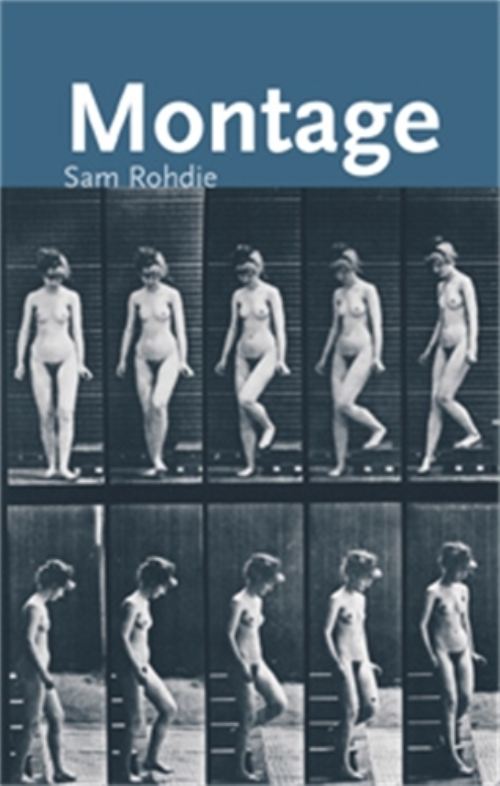
Montage enters into a dialogue with the cinema, probing and playing with its language of motion and stillness, continuity and discontinuity, constraint and openness, time and duration. Comprised of a series of elegantly-written and intellectually vibrant essays, Sam Rohdie's book carefully expresses his ideas and arguments in a manner free from the complexities of contemporary theory and cultural criticism. As much a book written with the cinema as about it, Montage explores associative and comparative possibilities in the films of directors such as Takeshi Kitano, Jean Renoir, D.W.
Griffith, Howard Hawks, Lev Kulsehov, Sergei Eisenstein and Alfred Hitchcock. It offers new and fascinating perspectives on mise en scène, framing, shots, and narrative variation. In combining the sensitive analysis of film forms and structures with an awareness of their historical and artistic relation to other art forms, it also elucidates an appreciation of montage aesthetics that is attentive to the influences of photography, painting and other arts.
Montage is a book that will enrich our ways of seeing, understanding, and enjoying the cinema.
| ISBN: | 9780719070389 |
| Publication date: | 30th October 2006 |
| Author: | Sam Rohdie |
| Publisher: | Manchester University Press |
| Format: | Hardback |
| Pagination: | 146 pages |
| Series: | Cinema Aesthetics |
| Genres: |
Film history, theory or criticism The Arts |
Montage enters into a dialogue with the cinema, probing and playing with its language of motion and stillness, continuity and discontinuity, constraint and openness, time and duration. Comprised of a series of elegantly-written and intellectually vibrant essays, Sam Rohdie's book carefully expresses his ideas and arguments in a manner free from the complexities of contemporary theory and cultural criticism.
Montage features in the following genres: Film history, theory or criticism, The Arts
Ebook, Hardback, Paperback. Not Available.
Montage was written by Sam Rohdie and published by Manchester University Press
Montage has 146 pages
Yes it is part of Cinema Aesthetics series