

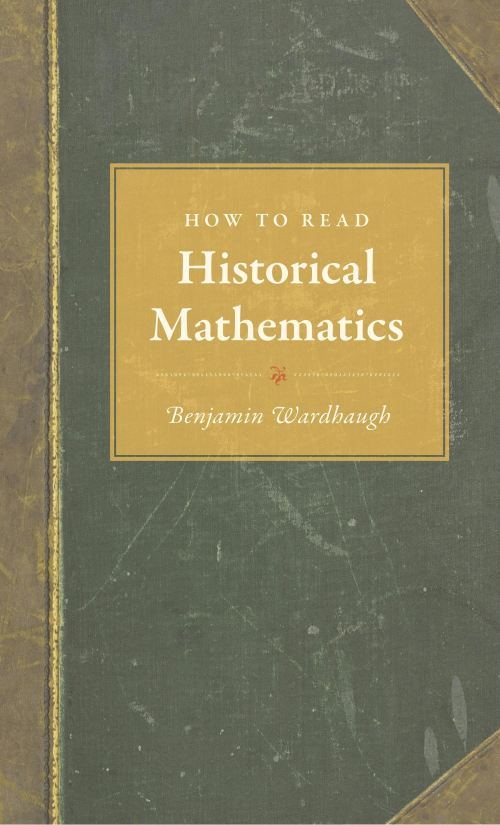
Techniques for deciphering texts by early mathematicians
Writings by early mathematicians feature language and notations that are quite different from what we're familiar with today. Sourcebooks on the history of mathematics provide some guidance, but what has been lacking is a guide tailored to the needs of readers approaching these writings for the first time. How to Read Historical Mathematics fills this gap by introducing readers to the analytical questions historians ask when deciphering historical texts.
Sampling actual writings from the history of mathematics, Benjamin Wardhaugh reveals the questions that will unlock the meaning and significance of a given text-Who wrote it, why, and for whom? What was its author's intended meaning? How did it reach its present form? Is it original or a translation? Why is it important today? Wardhaugh teaches readers to think about what the original text might have looked like, to consider where and when it was written, and to formulate questions of their own. Readers pick up new skills with each chapter, and gain the confidence and analytical sophistication needed to tackle virtually any text in the history of mathematics.
| ISBN: | 9780691140148 |
| Publication date: | 6th April 2010 |
| Author: | Benjamin Wardhaugh |
| Publisher: | Princeton University Press |
| Format: | Hardback |
| Pagination: | 116 pages |
| Genres: |
History of mathematics Philosophy of mathematics Reference works Mathematics |
Techniques for deciphering texts by early mathematiciansWritings by early mathematicians feature language and notations that are quite different from what we're familiar with today. Sourcebooks on the history of mathematics provide some guidance, but what has been lacking is a guide tailored to the needs of readers approaching these writings for the first time.
How to Read Historical Mathematics features in the following genres: History of mathematics, Philosophy of mathematics, Reference works, Mathematics
Hardback, Ebook. Not Available.
How to Read Historical Mathematics was written by Benjamin Wardhaugh and published by Princeton University Press
How to Read Historical Mathematics has 116 pages