

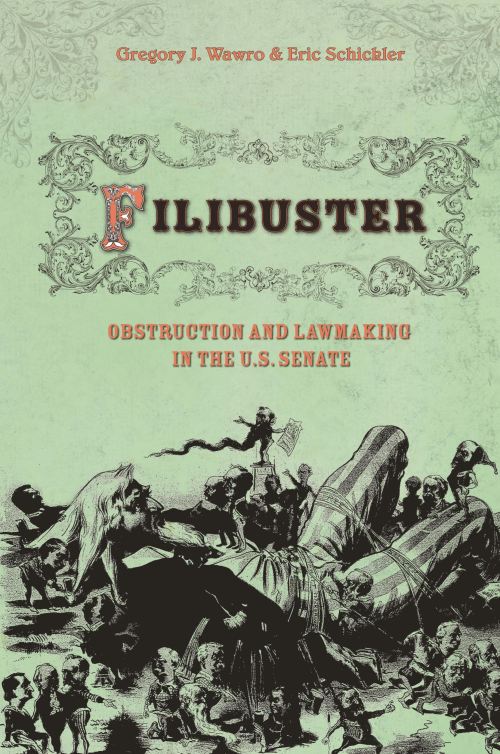
Parliamentary obstruction, popularly known as the "filibuster," has been a defining feature of the U.S. Senate throughout its history. In this book, Gregory J. Wawro and Eric Schickler explain how the Senate managed to satisfy its lawmaking role during the nineteenth and early twentieth century, when it lacked seemingly essential formal rules for governing debate.
What prevented the Senate from self-destructing during this time? The authors argue that in a system where filibusters played out as wars of attrition, the threat of rule changes prevented the institution from devolving into parliamentary chaos. They show that institutional patterns of behavior induced by inherited rules did not render Senate rules immune from fundamental changes.
The authors' theoretical arguments are supported through a combination of extensive quantitative and case-study analysis, which spans a broad swath of history. They consider how changes in the larger institutional and political context--such as the expansion of the country and the move to direct election of senators--led to changes in the Senate regarding debate rules. They further investigate the impact these changes had on the functioning of the Senate. The book concludes with a discussion relating battles over obstruction in the Senate's past to recent conflicts over judicial nominations.
| ISBN: | 9780691134062 |
| Publication date: | 21st September 2007 |
| Author: | Gregory J Wawro, Eric Schickler |
| Publisher: | Princeton University Press |
| Format: | Paperback |
| Pagination: | 308 pages |
| Series: | Princeton Studies in American Politics |
| Genres: |
Political structure and processes Central / national / federal government |
Parliamentary obstruction, popularly known as the "filibuster," has been a defining feature of the U.S. Senate throughout its history.
Filibuster features in the following genres: Political structure and processes, Central / national / federal government
Paperback. Not Available.
Filibuster was written by Gregory J Wawro, Eric Schickler and published by Princeton University Press
Filibuster has 308 pages
Yes it is part of Princeton Studies in American Politics series