

Monumental verse.
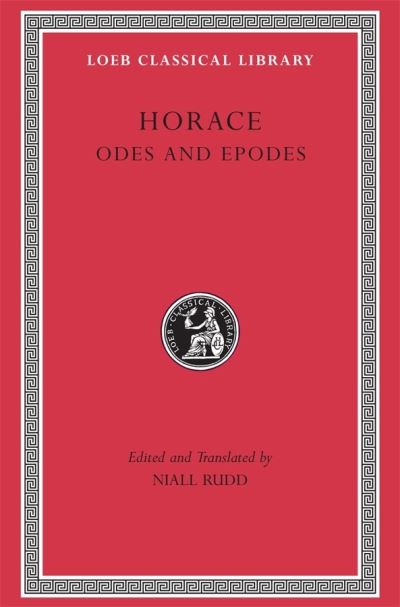
The poetry of Horace (born 65 BC) is richly varied, its focus moving between public and private concerns, urban and rural settings, Stoic and Epicurean thought. The Loeb Classical Library edition of the great Roman poet's Odes and Epodes boasts a faithful and fluid translation and reflects current scholarship.
Horace took pride in being the first Roman to write a body of lyric poetry. For models he turned to Greek lyric, especially to the poetry of Alcaeus, Sappho, and Pindar; but his poems are set in a Roman context. His four books of Odes cover a wide range of moods and topics. Some are public poems, upholding the traditional values of courage, loyalty, and piety; and there are hymns to the gods. But most of the Odes are on private themes: chiding or advising friends; speaking about love and amorous situations, often amusingly. Horace's seventeen Epodes, which he called iambi, were also an innovation for Roman literature. Like the Odes they were inspired by a Greek model: the seventh-century iambic poetry of Archilochus. Love and political concerns are frequent themes; the tone is only occasionally aggressive. "In his language he is triumphantly adventurous," Quintilian said of Horace; Niall Rudd's translation reflects his different voices.
| ISBN: | 9780674996090 |
| Publication date: | 22nd June 2004 |
| Author: | Horace, Niall Rudd |
| Publisher: | Harvard University Press |
| Format: | Hardback |
| Pagination: | 350 pages |
| Series: | Loeb Classical Library |
| Genres: |
Poetry by individual poets Literary studies: ancient, classical and medieval Literary studies: plays and playwrights |
Monumental verse.The poetry of Horace (born 65 BC) is richly varied, its focus moving between public and private concerns, urban and rural settings, Stoic and Epicurean thought. The Loeb Classical Library edition of the great Roman poet's Odes and Epodes boasts a faithful and fluid translation and reflects current scholarship.
Odes and Epodes features in the following genres: Poetry by individual poets, Literary studies: ancient, classical and medieval, Literary studies: plays and playwrights
Hardback. £22.46, down from the £24.95 cover price. Not Available.
Odes and Epodes was written by Horace, Niall Rudd and published by Harvard University Press
Odes and Epodes has 350 pages
Yes it is part of Loeb Classical Library series
£22.46, reduced from £24.95. Not Available.